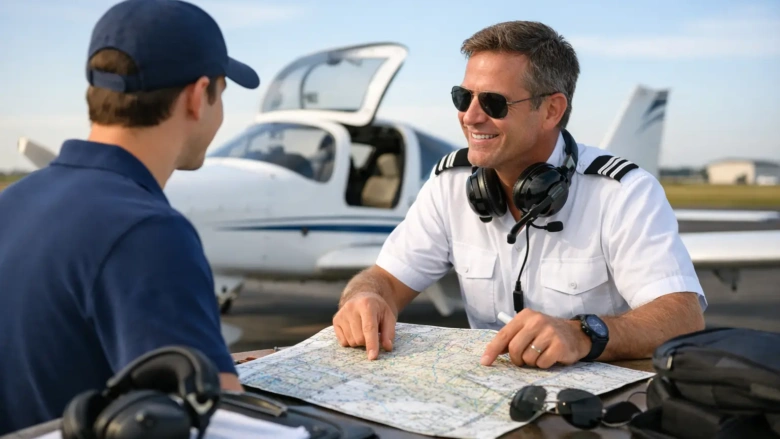
A delayed connection, a full inbox, and a deadline at 5 p.m. can make travelers ask, can I fly while working? If you are a passenger, the answer is usually yes, with practical limits. If you mean operating an aircraft while handling a separate job, the answer is no. Flying demands full attention, and safe aviation depends on disciplined workload management.
That distinction matters for anyone considering pilot training or an aviation career. Professional pilots work in the air, but their work is the flight: planning, operating the aircraft, communicating, monitoring systems, and making sound decisions. A laptop, client call, or unrelated side task does not belong in that workload.
Can I Fly While Working as a Passenger?
For most travelers, a flight can be useful work time. Many airlines offer Wi-Fi, and a quiet block of time away from meetings can be ideal for writing, reviewing documents, organizing a project plan, or working through email. But air travel is not a dependable replacement for an office or home workspace.
Connectivity can be inconsistent, especially on regional routes, during boarding, or over certain areas. Power outlets may not work or may not be available at your seat. Cabin space is limited, the person in front of you may recline, and turbulence can interrupt any task that requires fine focus. Plan around those constraints rather than assuming you will have several uninterrupted, fully connected hours.
It also helps to choose the right kind of work. Offline tasks are the safest bet: drafting a proposal, editing a presentation, reviewing downloaded files, building a checklist, or reading training material. Save high-stakes video calls, system updates, large uploads, and work involving sensitive information for the ground whenever possible.
Cabin rules still come first
Flight attendants’ instructions, posted airline policies, and federal safety rules take priority over work. During taxi, takeoff, and landing, you may be required to stow a laptop. Even when a device is permitted in airplane mode, keep your work setup simple and be ready to put it away promptly.
Do not let a deadline turn into a safety issue. Loose cords, a drink beside electronics, a bulky workstation blocking your tray table, or headphones that prevent you from hearing crew instructions all create unnecessary problems. The productive traveler is prepared, but also flexible.
Why Pilots Cannot Multitask With Outside Work
In aviation, multitasking is often misunderstood. Pilots may manage several tasks at once, but they do so through training, procedures, prioritization, and crew coordination. That is not the same as splitting attention between flying and an unrelated job.
A pilot’s responsibilities begin well before the engine starts. They include reviewing weather, assessing aircraft performance, checking fuel requirements, planning alternatives, completing inspections, conducting briefings, and confirming that the flight can be completed safely. In the air, conditions can change quickly. Air traffic control instructions, changing weather, mechanical indications, traffic, and navigation demands require immediate attention.
Federal aviation regulations and operational procedures require pilots to operate safely and maintain appropriate attention to the flight. For airline crews, company manuals and sterile-cockpit procedures further restrict nonessential activities during critical phases of flight. For a student pilot, the standard is just as clear: your attention belongs on the lesson, the aircraft, and the instructor’s direction.
Checking work messages while flying might sound harmless during smooth cruise flight, but it creates a poor habit. A small distraction can delay recognition of a developing problem. In training, it also takes mental capacity away from the very skills that need repetition: maintaining altitude and heading, scanning instruments, communicating clearly, and staying ahead of the airplane.
Flight instruction is work, but it is focused work
A flight instructor is working while airborne, but every task supports the training mission. The instructor is monitoring the aircraft, evaluating the student, managing risk, explaining procedures, and preparing the student to make safe decisions independently. That professional focus is one reason structured training produces better outcomes than scattered, occasional lessons.
At Riverside Flight Academy, students progress through a defined training path with instructor guidance, ground preparation, simulator practice, and in-aircraft application. The goal is not simply to stay busy in the cockpit. It is to build the judgment and habits required for increasingly complex operations.
Plan Productive Travel Time Without Overcommitting
If you need to work while traveling as a passenger, preparation determines whether the flight becomes useful or frustrating. Download what you need before boarding, including documents, reference material, and any software files. Bring a charged battery pack and pack your charger where it is easy to reach.
Set one or two realistic priorities for the flight. A two-hour trip does not provide two hours of productive work. Boarding, settling in, interruptions, descent, and device-stowage time can shrink the usable window considerably. A practical target may be completing one focused document review or clearing a defined group of emails.
Use privacy awareness, too. A seatmate can easily see a bright screen, and public Wi-Fi requires caution. Avoid opening personnel records, financial information, proprietary customer data, or other material your employer expects you to protect. A privacy screen can help, but it does not replace good judgment.
For calls, wait until you are in the terminal. Even where in-flight connectivity supports messaging, a cabin is not an appropriate setting for a business discussion that affects everyone around you. Keep notifications quiet, use headphones, and respect the shared environment.
How This Applies to Career-Focused Pilots
People entering aviation often picture the dramatic parts of the job: takeoffs, landings, new destinations, and the view from the flight deck. The professional reality also includes preparation, study, documentation, recurrent training, and a constant commitment to managing risk. Pilots do not succeed because they can do everything at once. They succeed because they know what deserves their attention now.
That mindset starts early. During private pilot training, you learn to prioritize aircraft control, navigation, communication, and checklist discipline. Instrument training adds a more demanding scan and greater reliance on procedures. Commercial and multi-engine training raise expectations for precision, judgment, and professional standards. Each rating builds on the ability to manage workload without becoming distracted.
This is one reason consistent training matters. Long gaps between lessons mean more time relearning procedures and less time advancing. A structured schedule, reliable aircraft access, and well-prepared ground work help students arrive ready to focus on the next skill. That can make training more efficient while protecting the safety standards that aviation requires.
The Better Question to Ask Before You Board
Instead of asking whether you can work for an entire flight, ask what kind of work fits the flight you have. If you are a passenger, choose a limited offline task, prepare for inconsistent access, and remain ready to stow your equipment. If you are the pilot, the flight is your work – and it deserves your complete attention.
That same discipline carries beyond the cockpit. The most capable pilots and professionals are not the people who try to fill every minute. They are the people who recognize when focused preparation, a clear priority, and the willingness to pause will produce a better result.