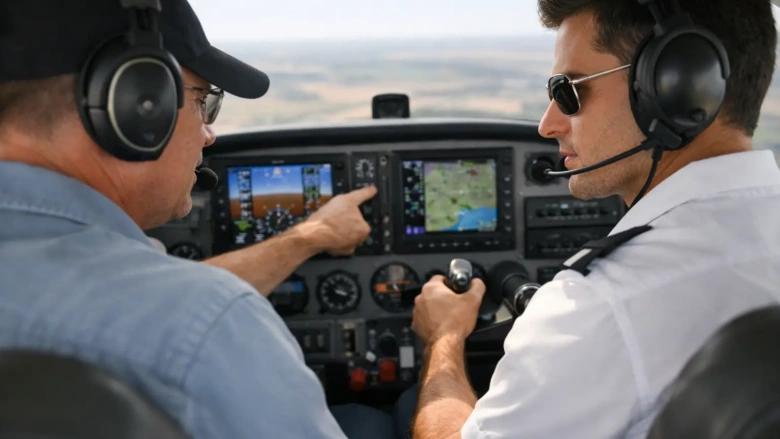
A first flight can feel the same whether you hope to fly a Cessna to lunch on weekends or sit in the right seat of an airliner someday. The difference becomes clear after that first lesson: career pilot training vs recreational flying calls for different commitments, timelines, budgets, and training habits. Choosing the right path early helps you invest with purpose while keeping the joy of flying at the center.
Career Pilot Training vs Recreational Flying: The Core Difference
Recreational flying is built around personal freedom. You train to earn a certificate that lets you fly for enjoyment, travel, take friends and family on trips, and continue developing at your own pace. Your goal is safe, confident personal aviation – not earning income from the cockpit.
Career pilot training is a structured progression toward professional qualifications. It begins with the same foundational skills but continues through the ratings and experience required to fly for compensation. For most students, that means progressing from Private Pilot to Instrument Rating, Commercial Pilot, Certified Flight Instructor, Multi-Engine Rating, and eventually Airline Transport Pilot eligibility.
Neither path is more valid than the other. A pilot who flies a well-planned weekend trip with passengers carries real responsibility and deserves serious training. The deciding question is simple: Do you want aviation to be a meaningful part of your life, or do you want it to become your profession?
What Recreational Flying Training Looks Like
Most recreational pilots begin with the Private Pilot Certificate. This certificate is the foundation of general aviation and allows you to act as pilot in command of an aircraft for non-commercial purposes, subject to FAA rules and operating limitations.
The FAA minimum is 40 flight hours under Part 61, although many students need more time before they are ready for the practical test. A structured Part 141 program has different FAA-approved hour requirements and a defined syllabus. In either setting, students learn aircraft control, takeoffs and landings, navigation, weather decision-making, emergency procedures, radio communication, and the judgment needed to protect every person on board.
For a recreational student, training frequency often follows work, school, family, and budget. Flying once or twice a week can work well if the student stays prepared between lessons. The trade-off is that long gaps can create skill decay, requiring additional review before moving forward.
After earning a Private Pilot Certificate, many recreational pilots stop there for a while. Others add an Instrument Rating for greater capability in the national airspace system, pursue a tailwheel or high-performance endorsement, or rent aircraft for regional travel. The pace is personal. There is no requirement to build hours quickly or complete ratings on a professional schedule.
What Career Pilot Training Requires
Professional training treats each certificate as a step in a larger operational pathway. The goal is not only to pass checkrides. It is to develop repeatable procedures, disciplined decision-making, advanced aircraft knowledge, and the ability to perform consistently under evaluation.
A typical career sequence includes several major milestones:
- Private Pilot Certificate, where foundational airmanship begins
- Instrument Rating, which develops precision flying and weather-aware planning under instrument flight rules
- Commercial Pilot Certificate, which permits certain compensated flying operations
- Flight Instructor certificates, often used to build the flight experience needed for airline and other professional opportunities
- Multi-Engine and ATP qualifications, depending on the pilot’s intended career path
The exact order and timing can vary. Some pilots train full-time in an accelerated program; others keep a job while pursuing ratings on a consistent part-time schedule. Military, corporate, charter, aerial survey, agricultural aviation, and airline paths also have different experience expectations. Still, the central reality remains: professional aviation requires a long-term plan.
Career-track students benefit from frequent training because repetition builds proficiency faster. Flying several times a week, completing ground assignments before each lesson, and using simulator sessions to practice procedures can reduce retraining time. A modern fleet with standardized Garmin avionics also helps students transfer skills from one aircraft to another with less friction.
Time, Cost, and Consistency Matter More Than Most People Expect
The largest difference is not the first certificate. Both recreational and career students must establish the same fundamental skills. The difference is what happens after private pilot training.
A recreational pilot can pause after certification and fly as budget and schedule allow. A career student must plan for multiple certificates, advanced ground instruction, knowledge tests, practical tests, aircraft time, simulator time, medical certification, and the flight-hour building that follows commercial training.
That does not mean a career path must be rushed. Accelerated training works best for students who can protect their schedule, study consistently, and arrive ready for every lesson. A fast timeline without preparation simply shifts cost into repeated lessons. The efficient path is the one that matches your availability, financial plan, and learning style.
Before committing, ask a school how it manages aircraft availability, instructor scheduling, maintenance downtime, and stage checks. These operational details directly affect progress. A low hourly rate is less valuable if cancellations and long gaps force you to repeat maneuvers every week.
The Medical Certificate Is a Career Planning Issue
Recreational flying and professional flying have different medical considerations. A third-class medical certificate is commonly associated with private pilot privileges, while commercial flying generally requires at least a second-class medical certificate. Airline pilot operations require a first-class medical certificate when exercising ATP privileges.
Students considering aviation as a profession should address medical eligibility early, preferably before making a major training investment. This is not about assuming a problem. It is practical career planning. The FAA medical certification process considers vision, hearing, medical history, medications, and other factors. If there is a prior condition or uncertainty, speak with an Aviation Medical Examiner before building a training plan around a professional outcome.
Which Path Fits Your Goals?
Recreational flying may be the right choice if you want a challenging skill, a new way to travel, and the satisfaction of being responsible for your own flights. You can always add ratings later. Plenty of professional pilots began with a simple desire to learn to fly.
Career training is likely a stronger fit if you are motivated by airline, charter, corporate, cargo, instruction, or specialized commercial operations. You should be comfortable with study, standardized procedures, evaluations, and a training schedule that remains a priority even when life gets busy. Passion matters, but professional progress also depends on consistency.
If you are undecided, start with an introductory flight lesson and be candid about both possibilities. The right instructor can help you understand what training feels like before you commit to a full program. At Riverside Flight Academy, that conversation can become a practical plan built around your current experience, schedule, and intended destination.
Start With the Next Honest Step
You do not need to decide your entire aviation future before you touch the controls for the first time. You do need a clear reason for beginning and a training environment that respects that reason. Fly for the view, train for a career, or begin recreationally and let your ambition grow – but choose a path that gives your effort, time, and investment a real direction.