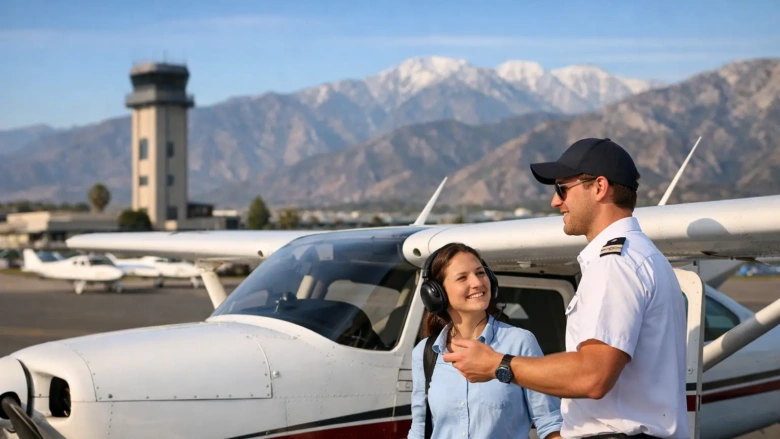
A commercial certificate is earned long before the polished photo beside an airplane. It is earned during an early-morning preflight, a weather cancellation that changes the week’s plan, a landing that needs honest debriefing, and the decision to study when flying is not possible. The most useful commercial pilot stories are not simply about reaching the cockpit. They show how pilots build the judgment, consistency, and discipline that professional flying demands.
For someone starting with zero flight time, those stories can make a large goal feel real. They also provide a needed correction to the highlight reel. Aviation can move quickly with a structured schedule, dependable aircraft access, and committed study habits, but there is no shortcut around proficiency. Every certificate carries a higher level of responsibility, and every hour should contribute to the pilot you are becoming.
What Commercial Pilot Stories Often Leave Out
The public version of a pilot’s path usually begins with a first flight and ends with a new uniform, airline interview, or instructor certificate. That arc is inspiring, but it can hide the work between milestones. A pilot may spend months learning to interpret weather trends, fly precise instrument procedures, manage radio calls in busy airspace, and recognize when a flight should not continue as planned.
Commercial training is also frequently misunderstood. The FAA commercial pilot certificate permits a pilot to be compensated for certain flying operations, subject to applicable regulations and operating requirements. It is a major professional credential, but it is not automatically an airline job. Most airline-bound pilots build experience after commercial training, often as certificated flight instructors, before qualifying for an Airline Transport Pilot certificate and meeting an operator’s hiring standards.
That distinction matters because it changes how students should view training. The objective is not just to pass a practical test. It is to develop repeatable habits that will stand up to a demanding instructor, a future employer, a passenger, and a changing operating environment.
Three Stories Behind a Professional Pilot Path
The student who stopped chasing perfect flights
One common training story begins with a student who believes every lesson must look smooth from engine start to shutdown. Then comes a cross-country flight with unexpected winds, a missed radio call, or an approach that requires a go-around. At first, it feels like failure.
A professional instructor sees something else: an opportunity to evaluate decision-making. Did the pilot recognize the problem early? Did they maintain aircraft control? Did they communicate clearly and use available resources? Most importantly, did they learn from the event without making excuses?
Commercial pilots are not expected to be flawless. They are expected to identify threats, manage them deliberately, and make sound decisions before small errors become larger ones. Students who improve fastest tend to treat each lesson as data. They review what happened, prepare a specific correction, and return ready to apply it.
The instrument student who learned to trust the process
Visual flying builds fundamental aircraft control, but instrument training changes the way many pilots think. Instead of relying on an unobstructed view outside, the pilot learns to fly accurately by reference to instruments, charts, procedures, weather information, and disciplined cross-checks.
The turning point is often not a dramatic flight in clouds. It is the moment a student stops trying to mentally improvise every task and begins following a stable flow. Brief the approach. Set frequencies. Verify navigation. Anticipate the next altitude and heading. Keep the airplane ahead of the workload.
That process-oriented mindset carries directly into commercial operations. Whether flying a scenic tour, transporting a business client, instructing a new student, or operating as part of a two-pilot crew, preparation reduces surprise. A pilot who knows the next several steps can devote more attention to weather, traffic, fuel, aircraft performance, and the people on board.
The instructor who gained more than flight time
For many career pilots, flight instructing is the bridge between commercial certification and advanced opportunities. It is also one of the clearest tests of aviation knowledge. Explaining a maneuver requires more than performing it. An instructor must understand the aerodynamics, regulations, common errors, risk factors, and teaching sequence behind it.
The experience can be humbling. A new instructor may fly multiple lessons in a day, adapt to different learning styles, and make conservative calls when conditions exceed a student’s current ability. Those hours build communication skills and practical judgment alongside logbook time.
This is why a career pathway should be planned beyond the commercial checkride. Students should understand how their next credential, their instructing opportunity, and their hour-building strategy connect to long-term goals. A well-organized program can make that progression more efficient, but the pilot still has to show up prepared and coachable.
The Habits That Make These Stories Matter
The details differ, but strong pilot stories tend to share the same operating habits. Consistent training is one. Long gaps between lessons can mean time spent relearning skills instead of advancing them. A realistic schedule, protected study time, and reliable access to aircraft and simulators help students maintain momentum.
Preparation is another. Before a flight, professional-minded students know the lesson objective, aircraft limitations, expected weather, route, required documents, and relevant regulations. They arrive with questions already formed. Afterward, they document what they need to improve while the lesson is still fresh.
The third habit is humility. Aviation rewards confidence that is grounded in evidence, not ego. A pilot who asks for clarification, requests another practice approach, or cancels for weather when appropriate is demonstrating strength. The safest decision is not always the most convenient one, and mature pilots learn that early.
Finally, good stories include support. Progress is faster when students have instructors who set clear standards, offer direct feedback, and adjust training to a student’s stage of development. At Riverside Flight Academy, that support is reinforced through structured training paths, modern Garmin-equipped aircraft, simulator practice, and pilot-led mentorship focused on professional outcomes.
Turning Inspiration Into a Training Plan
If a pilot story motivates you, use it as a prompt for practical questions. What certificate did that pilot earn first? How often did they train? Which skills created the biggest challenge? How did they build time after commercial training? The answers will vary according to budget, availability, prior experience, and whether the goal is airline, corporate, charter, instructional, or recreational flying.
A career-focused student may choose an accelerated Part 141 environment because the structured syllabus, frequent training, and defined milestones support efficient progress. Another student may need a more flexible schedule around college or full-time work. Neither approach is automatically better. The right choice is the one that allows for regular training, financial planning, adequate rest, and genuine mastery.
It also helps to plan for the less visible parts of aviation education. Ground school is not a box to check before flying. It is where pilots learn to make sense of weather, performance, airspace, regulations, and systems. Simulator sessions are not a substitute for flight time, but they can be an efficient place to practice procedures and reduce cockpit workload. Checkride preparation is not cramming. It is the final confirmation that skills and knowledge are ready to be applied independently.
The strongest commercial pilot stories are rarely built on one extraordinary day. They are built through hundreds of ordinary decisions made well: arriving prepared, flying to standards, accepting feedback, and respecting the limits of both aircraft and pilot. Start with the next lesson, take it seriously, and let each milestone become evidence that the professional cockpit is no longer just a dream.