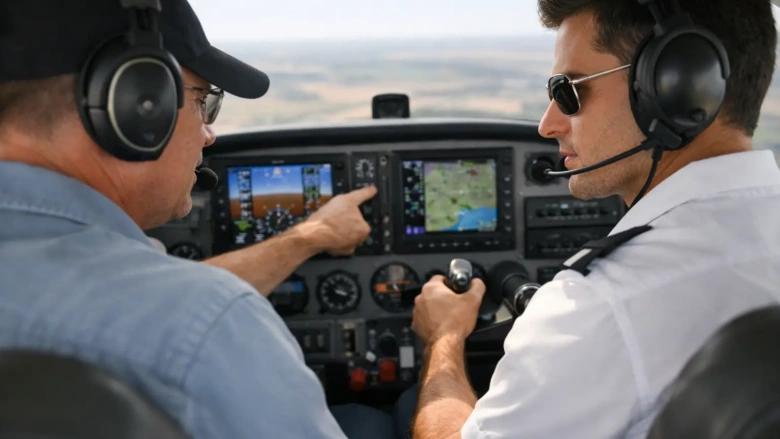
The first certificate you choose shapes far more than your first solo. In the sport pilot versus private pilot decision, the real question is not simply which license is faster or less expensive. It is what kind of flying you want access to one year, five years, or a career later.
A Sport Pilot certificate can be a focused, rewarding route for pilots who want straightforward daytime recreational flying in light aircraft. A Private Pilot certificate requires more training, but it opens a much broader set of privileges and creates the foundation for instrument, commercial, and instructor training. For many students, especially those with professional aviation goals, that distinction matters from day one.
Sport Pilot Versus Private Pilot at a Glance
The FAA requires a minimum of 20 flight hours for a Sport Pilot certificate. A Private Pilot certificate requires at least 40 hours under Part 61 or 35 hours in an approved Part 141 course. Those are legal minimums, not guaranteed completion totals. Weather, aircraft availability, lesson frequency, and how consistently a student studies all affect the final number of hours and cost.
Sport pilots fly eligible light-sport aircraft, generally in daytime visual conditions. They may carry one passenger, but they cannot fly for compensation or hire, fly at night, or operate in all controlled airspace without the appropriate training and endorsement.
Private pilots have wider operating authority. They can fly aircraft for which they are properly rated, carry passengers within the aircraft’s approved limits, operate in controlled airspace, and fly at night after receiving the required training. A Private Pilot certificate alone does not allow a pilot to fly for hire, but it is the necessary next step toward advanced ratings and professional certificates.
The certificate is only one part of the plan
A lower minimum-hour requirement makes the Sport Pilot path attractive, but it should not be viewed as a shortcut to airline, charter, corporate, or flight instructor work. A career-track pilot will eventually need a Private Pilot certificate, Instrument Rating, Commercial Pilot certificate, and usually flight instructor credentials to build experience.
If those goals are already clear, beginning with private pilot training often avoids a transition later. If your goal is weekend flying in a light aircraft and your mission will remain local or regional, sport pilot training may be exactly the right level of certification.
What You Can Fly and Where You Can Go
Aircraft capability is one of the biggest practical differences. Sport pilots are limited to aircraft that meet light-sport eligibility rules. These aircraft are often modern, efficient, and enjoyable to fly, with glass avionics and lower operating costs than larger airplanes. They can be excellent training platforms for building strong visual flying skills.
The limitation is mission flexibility. A light-sport aircraft generally has less useful load, less room for baggage, and fewer options when you want to carry a passenger, account for warm-weather performance, or make a longer trip. A pilot planning frequent cross-country travel may find those restrictions become noticeable quickly.
Private pilots can train and fly in a much wider range of single-engine airplanes. That includes common training aircraft such as Cessna 172s and Piper Archers, as well as higher-performance aircraft after receiving the necessary endorsements and training. More aircraft options can mean more flexibility for family trips, passenger comfort, baggage, and changing weather conditions.
Night, weather, and airspace matter in Southern California
Daytime VFR flying is a legitimate and satisfying form of aviation. Still, pilots based in Riverside, San Bernardino, or Los Angeles Counties often operate around busy airports, complex airspace, coastal weather patterns, and long distances between destinations. Private pilot training prepares students for broader airspace operations and includes night training, which can be valuable even for pilots who do not expect to fly after dark often.
Neither certificate alone authorizes flight in instrument meteorological conditions. That requires an Instrument Rating. But the Private Pilot certificate is the standard foundation for instrument training, while sport pilot privileges are designed around visual, daytime operations.
Medical Requirements Can Influence the Decision
For some prospective pilots, the medical question is central. Sport pilots may be able to use a valid US driver’s license in place of an FAA medical certificate, provided they meet the FAA’s eligibility requirements. This option can reduce one barrier for pilots who are medically eligible but prefer not to pursue a traditional FAA medical certificate.
That does not mean medical history should be treated casually. Certain medical conditions, a history of FAA medical denial, suspension, or revocation can affect whether a person may use driver’s-license medical eligibility. A student with any concern should get informed guidance before investing heavily in training.
Private pilots typically need at least a third-class FAA medical certificate, unless they qualify to operate under BasicMed after having held a medical certificate. Career-bound pilots should plan beyond the third-class level. Commercial flying generally requires a second-class medical, and airline flying requires a first-class medical.
For that reason, students who want a professional cockpit career should consider obtaining an FAA medical early. It is better to identify a medical issue before committing substantial time and money to a career-training path.
Training Time and Cost: Look Beyond the Minimums
The Sport Pilot certificate usually requires fewer required flight hours, so it can cost less. That is true when training is consistent, the aircraft is available, and the student reaches proficiency efficiently. However, the difference is not always as large as prospective pilots expect.
Flight training is performance-based. A pilot must demonstrate sound judgment, aircraft control, navigation, communication, and safe decision-making before taking a practical test. A student who flies infrequently may need additional review in either program, which adds both time and expense.
Private pilot training includes more required experience, including solo cross-country work, night operations, and broader preparation for the FAA practical test. It costs more upfront because it develops a more versatile pilot. It can also create a cleaner progression for a student who plans to continue to an Instrument Rating or Commercial certificate.
The best way to control training cost is not to chase the lowest advertised minimum. Train regularly, prepare before each lesson, complete ground-school assignments on schedule, and choose a school with dependable aircraft and instructor availability. Consistency protects skills and reduces repeated review flights.
Which Certificate Fits Your Goal?
A Sport Pilot certificate is often a strong choice if you want to fly for recreation, prefer light-sport aircraft, expect to fly primarily during the day in good weather, and have no interest in pursuing advanced ratings. It can also be a practical entry point for someone who wants a structured introduction to piloting before making a larger commitment.
A Private Pilot certificate is usually the better choice if you want more aircraft choices, expect to carry family or friends on longer trips, want night-flying privileges, or see any possibility of advanced training. It is the clear choice for students targeting commercial aviation, flight instruction, or airline pathways.
There is no failure in choosing sport pilot privileges for a recreational mission. The mistake is choosing based only on the shortest path without considering the destination. A certificate that saves time today can create extra training steps later if your ambitions expand.
Can a Sport Pilot Move Into Private Training Later?
Yes. Sport pilot experience can provide a useful foundation in aeronautical knowledge, preflight discipline, radio communication, takeoffs and landings, navigation, and decision-making. Training received toward a Sport Pilot certificate may count toward a Private Pilot certificate when it meets the applicable FAA requirements and is properly documented.
Still, a transition requires additional training because private pilot standards include areas outside sport pilot privileges. These commonly include night training, additional cross-country experience, and preparation to operate with broader aircraft capabilities and operating privileges.
For a student who starts with sport pilot training, moving into private training later is achievable. It simply should be a deliberate decision, not an unexpected detour. Discuss the likely next certificate with your instructor early so each lesson supports your long-term direction.
Choose the Training Path That Supports Your Next Goal
The right certificate should match the flying you genuinely plan to do, not just the training you hope to finish quickest. If a light airplane, one passenger, daytime skies, and recreational freedom describe your goal, sport pilot training can put aviation within reach. If you want broad travel options or a pathway toward professional credentials, private pilot training gives you more room to grow.
Before enrolling, sit down with an instructor and describe your ideal flying year in detail: the aircraft, passengers, destinations, schedule, and whether aviation could become a profession. A clear conversation with a pilot-led school such as Riverside Flight Academy can turn that vision into a training plan built for the certificate you will actually need.