A flight school review can tell you whether a student enjoyed a discovery flight. It can also reveal something far more valuable: whether the school consistently helps people show up, train often, build skill, and reach the certificate or rating they came for. When reading Riverside flight school reviews, look beyond star ratings and focus on the details that affect your progress in the cockpit.
Pilot training is a serious investment of time, focus, and money. The right school should make expectations clear, provide a structured path forward, and give you practical confidence that you can continue training when you are ready to fly.
How to Read Riverside Flight School Reviews
The most useful reviews are specific. A comment such as “great experience” is encouraging, but it does not explain what made the experience work. Details about instructor communication, aircraft scheduling, ground school, maintenance responsiveness, and checkride preparation are much more useful for someone choosing a training home.
Look for patterns across reviews rather than placing too much weight on one unusually positive or negative account. Every training environment will have occasional weather delays, aircraft maintenance events, or schedule changes. Aviation is operational by nature. What matters is how a school communicates during those moments and whether it has systems in place to keep students progressing.
A strong review often describes a student’s starting point and result. Did they begin with no flight experience and earn a Private Pilot Certificate? Did they move from private pilot to instrument, commercial, multi-engine, or flight instructor training? Did the instructor help them prepare for the practical test with a clear plan? These details provide better insight than broad praise alone.
Ask What Type of Student Wrote the Review
A recreational student flying once a week may judge a school differently than a career-focused student training four or five days per week. Neither perspective is wrong, but their priorities are different.
Career-track students should pay close attention to comments about training continuity, lesson availability, stage checks, simulator use, and instructor professionalism. Someone pursuing airline, charter, corporate, or instructor work needs a program that treats each rating as part of a larger professional pathway.
New students may care more about whether instructors were patient, welcoming, and able to explain complex subjects without making the learning environment intimidating. A school can be highly structured and still make a first-time student feel comfortable. The best training culture does both.
What Reviews Should Reveal About Training Quality
The instructor relationship is central to flight training. Aircraft and facilities matter, but your instructor is the person who helps turn procedures, weather decisions, radio work, and aircraft control into sound pilot judgment. Reviews that mention preparation, consistency, honest feedback, and availability are worth close attention.
Look for signs that instructors tailor training to the student while keeping standards high. Good instruction is not simply making each lesson enjoyable. It is identifying weak areas early, setting measurable goals, and requiring the student to meet the FAA standards needed to operate safely and confidently.
For students pursuing multiple certificates, continuity also matters. A school with experienced instructors and a clear training structure can prevent the repeated restarts that occur when expectations, records, or lesson plans are inconsistent. If reviews mention organized progress tracking or smooth transitions between training phases, that is a meaningful operational signal.
Aircraft Availability Is More Than Convenience
Training momentum is one of the biggest drivers of both confidence and cost control. When students fly regularly, they spend less time relearning prior lessons and more time moving toward the next milestone. Reviews that describe reliable scheduling and access to appropriate aircraft can therefore be more valuable than comments about a lobby or a scenic airport location.
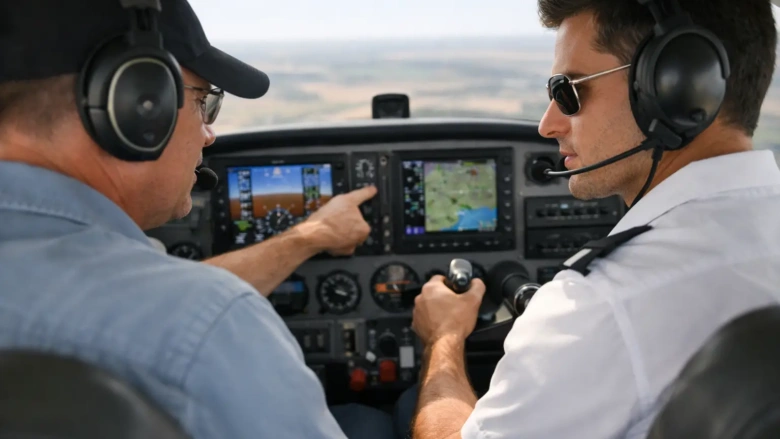
Ask how the fleet is managed, what happens when an airplane goes down for maintenance, and whether students have access to aircraft that match the stage of training. Modern avionics, including Garmin-equipped aircraft, can help students learn relevant cockpit workflows, but technology does not replace fundamental stick-and-rudder skill or disciplined decision-making.
There is a trade-off to consider. A larger fleet may offer more scheduling flexibility, while a smaller operation can sometimes provide a more intimate environment. The right choice depends on your availability, training pace, and whether the school can reliably support your specific goals.
Safety Culture Shows Up Between the Lines
Students rarely see a complete safety program from a review page, but they can often recognize its effects. Reviews that mention instructors refusing to rush unsafe flights, taking weather seriously, conducting thorough preflight and postflight discussions, or maintaining clear standards deserve attention.
A professional flight school should never make a student feel pressured to fly when conditions, readiness, or aircraft status suggest otherwise. At the same time, safety should not become an excuse for vague cancellations or poor communication. A healthy safety culture explains the decision, teaches the reasoning behind it, and helps the student use the time productively through ground instruction, simulator work, or rescheduling.
When visiting a school, ask how it handles weather minimums, maintenance write-ups, solo endorsements, and stage checks. The answers should be clear, practical, and consistent with a training organization that takes its responsibility seriously.
Reviews and the Real Cost of Becoming a Pilot
Price appears in many flight school reviews, often without enough context. Hourly rates matter, but they are only one part of the financial picture. Your total training cost depends on how often you fly, how prepared you are before each lesson, the efficiency of your training plan, aircraft type, insurance requirements, checkride expenses, and the amount of additional practice you need.
Be cautious with any review that treats the FAA minimum flight time as a guaranteed final total. FAA minimums establish eligibility, not a promise that every student will be ready at that point. Students progress at different rates, and weather, work schedules, study habits, and training frequency all make a difference.
The better question is whether the school explains costs honestly and helps you build a realistic training plan. For a career-focused student, financing support, structured Part 141 training, online or classroom ground school, simulator access, and an organized sequence of ratings may create more value than choosing the lowest advertised aircraft rate.
Riverside Flight Academy is designed around that kind of structured progression, offering training from first flight experiences through professional certifications. Prospective students should still ask direct questions about their individual schedule, budget, and target certificate. A credible school will welcome that conversation.
Turn Reviews Into Better Questions
Reviews should be the beginning of your research, not the final decision. After reading them, schedule a visit, meet instructors, look at the aircraft you could actually fly, and ask how the school would structure your first 30, 60, and 90 days of training.
Ask whether aircraft and instructors are available during the times you can train. Ask how often students typically fly, how the school prepares them for knowledge tests and practical tests, and what support is available if progress slows. If you are pursuing a professional path, ask how the school sequences private, instrument, commercial, multi-engine, and flight instructor training.
Also pay attention to how the team answers. Clear answers do not need to be overly polished. They should show that the school understands operations, respects your investment, and has a plan for helping you move forward.
The best review is ultimately the one you create through your own experience: consistent lessons, honest coaching, safe decisions, and visible progress toward the pilot you intend to become. Choose a school that gives that progress a professional foundation from day one.