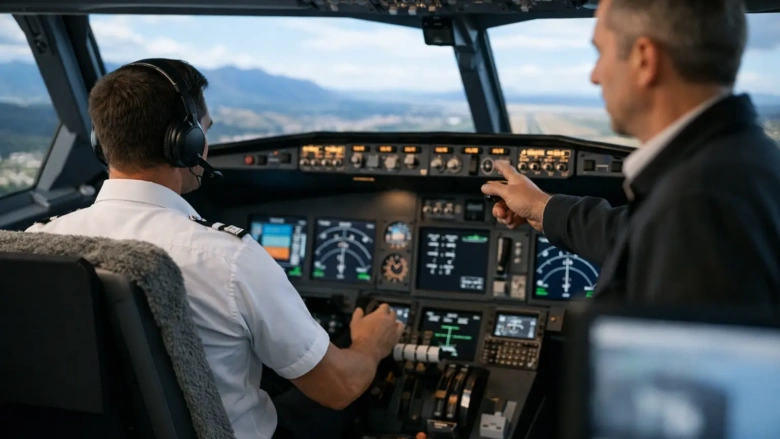
A canceled lesson can be frustrating. A pattern of canceled lessons can change your entire training timeline. Aircraft availability at flight schools is not simply a scheduling convenience – it directly affects how quickly you build skills, how much you spend refreshing them, and how confidently you move toward your next certificate or rating.
For a career-focused student, consistency is one of the most valuable parts of flight training. You are learning procedures, decision-making, radio work, aircraft control, and FAA standards at the same time. When lessons happen regularly, each flight builds on the last. When gaps become routine, the review time grows and momentum can disappear.
Why Aircraft Availability at Flight Schools Matters
Aircraft are the training environment. A well-designed syllabus, strong ground instruction, and experienced instructors all matter, but they must connect to regular time in an airplane. A student who flies two or three times per week generally retains more, advances through maneuvers more efficiently, and reaches checkride readiness with fewer expensive re-learning flights than a student who flies only when an airplane happens to open up.
That does not mean every week will look perfect. Weather, maintenance, FAA practical test availability, personal schedules, and airspace restrictions can all affect a training plan. Southern California offers many flyable days, but wind, heat, marine layers, and busy airspace still require sound judgment. The goal is not a promise that no lesson will ever change. The goal is a school with enough operational depth to keep ordinary scheduling issues from becoming long interruptions.
Availability also affects cost. When students cannot maintain a regular pace, they often need additional review before moving forward. A few extra landings after a short weather delay are normal. Repeating major portions of instrument procedures, commercial maneuvers, or cross-country planning because of repeated multiweek gaps is a different issue. The aircraft hourly rate may be the same, but the total cost of reaching the finish line can rise.
A Larger Fleet Helps, but It Is Not the Whole Answer
Fleet size is a useful starting point, not a complete answer. A school may advertise several aircraft, yet some may be assigned to advanced training, undergoing scheduled maintenance, reserved for introductory flights, or unavailable during the times you can train. What matters is whether the school has an appropriate number of reliable aircraft for its active student population and training schedule.
The type of aircraft matters as well. A student working toward a Private Pilot Certificate needs dependable access to a suitable primary trainer. An instrument student benefits from aircraft equipped for the avionics and procedures they are learning. A commercial or instructor applicant may need access to aircraft that support complex training requirements or the specific maneuvers required for that stage. Multi-engine students need more than a multi-engine airplane on the ramp – they need realistic access to it when their course calls for it.
Modern avionics can support more effective instruction, especially when students are learning GPS navigation, instrument procedures, flight planning, and cockpit flow. Still, technology does not eliminate the need for sound fundamentals. A good program uses its fleet intentionally, matching the airplane to the lesson while making sure students develop the judgment needed to fly safely beyond a single panel layout.
Maintenance Is a Sign of Professionalism, Not a Failure
Every training airplane will eventually come down for maintenance. That is expected and necessary. Aircraft fly often, student pilots work the brakes and tires hard, and FAA inspection requirements are non-negotiable. Be cautious of any school that treats maintenance as an inconvenience rather than a core safety responsibility.
The better question is how the school manages maintenance events. Does it communicate promptly when an aircraft is down? Can dispatch move students into another suitable aircraft? Are instructors prepared to adjust a lesson productively, perhaps using a simulator or ground session when that supports the syllabus? Is there enough fleet capacity that one maintenance issue does not cancel an entire week of training?
There is a trade-off here. Switching aircraft occasionally requires adaptation, and students should not be shuffled between airplanes without purpose. But becoming comfortable with more than one aircraft of the same training category can also be valuable. Professional pilots learn to manage differences while maintaining disciplined procedures. The school should provide continuity where it matters and flexibility when conditions require it.
Scheduling Systems Reveal a School’s Training Culture
Ask how scheduling actually works before enrolling. Some schools use online scheduling platforms that show aircraft and instructor availability in real time. Others rely on dispatch staff to coordinate reservations. Either approach can work if the process is clear, responsive, and built around student progress.
A useful scheduling system lets you reserve lessons far enough ahead to protect your training rhythm. For a full-time accelerated student, that may mean multiple recurring blocks each week. For a working adult, it may mean reliable early-morning, evening, or weekend training times. The right answer depends on your goals and schedule, but uncertainty should not be the default.
Also ask what happens when a lesson is canceled. If weather prevents a flight, can you reschedule quickly? If an instructor is unavailable, is there a clear backup process? If an airplane becomes unserviceable, will dispatch offer a comparable aircraft rather than simply removing the lesson from the calendar? These operational details tell you far more than a broad statement that a school has “good availability.”
Instructor Availability Is Part of the Equation
An airplane without an instructor does not move your training forward. Instructor capacity should be evaluated alongside fleet capacity, particularly if you want an accelerated program or have a narrow schedule. The best aircraft schedule in the world cannot compensate for weeks of waiting to fly with someone qualified to teach your next phase of training.
Consistency with one instructor can be extremely beneficial. They understand your strengths, recurring errors, learning style, and progress through the syllabus. At the same time, a professional school should have enough instructor coverage that vacations, checkrides, airline interviews, and normal staff changes do not leave students without a path forward.
For advanced students, ask whether instructors are available for the training you specifically need. Instrument, multi-engine, commercial, and flight instructor training require different experience and scheduling demands. A school should be candid about its capacity rather than accepting students into a program it cannot support at a reasonable pace.
Questions Worth Asking Before You Commit
Before selecting a school, have a direct conversation about operations. Ask how many aircraft are actively available for primary training, how far ahead students can book, and how often students typically fly each week. Ask whether aircraft are shared across different programs and whether certain times are especially difficult to reserve.
It is also reasonable to ask how the school handles unscheduled maintenance, weather cancellations, and instructor absences. You do not need a guarantee that disruptions will never happen. You need evidence of a plan. Clear answers, realistic expectations, and visible scheduling practices are signs of an operation that respects both safety and student investment.
If you are comparing programs, avoid looking only at the advertised hourly rate. Consider the likely pace of training, the reliability of access, the quality of dispatch support, and whether simulator sessions can keep you learning when flying is not the right option. A lower hourly rate can lose its advantage if scarce aircraft access repeatedly extends the program.
Build Your Training Plan Around Consistency
Your own preparation plays a role in aircraft access, too. Reserve recurring training blocks when possible, arrive prepared, complete assigned ground work, and communicate early if your schedule changes. A student who treats flight training like a professional commitment is better positioned to make the most of every scheduled hour.
At Riverside Flight Academy, the objective is not simply to put students on a calendar. It is to create a structured path where aircraft, instructors, ground training, and simulator work support measurable progress toward a certificate, rating, or aviation career.
Choose a school that can explain how it keeps students moving when operations become complicated. The right training environment will not eliminate every delay, but it will give your ambition a dependable place to build speed, skill, and confidence.