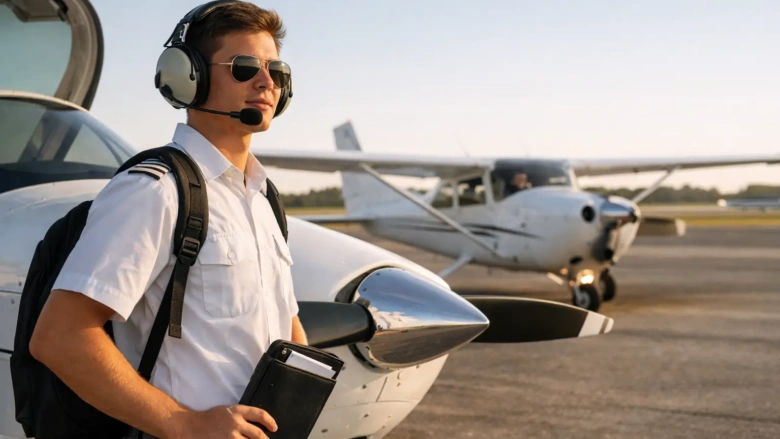
The first time you take the controls, the airplane may feel more responsive than expected. A few lessons later, you will begin to recognize a pattern: every flight has a purpose, every maneuver builds on the last, and progress becomes measurable. Student pilot milestones turn the big goal of earning a certificate into a sequence of achievable standards.
For a career-minded student, milestones also provide a useful reality check. Flight training is not just about accumulating hours. It is about building sound judgment, consistent aircraft control, strong aeronautical knowledge, and habits that will hold up when the workload increases. The pace can be efficient with regular training and aircraft availability, but each stage must be earned.
Student Pilot Milestones That Matter
The discovery flight and training plan
A discovery flight is often the first milestone, even if it is not an FAA requirement. It gives a prospective student a direct look at the training environment, the aircraft, and the workload involved in basic flying. You may handle the controls during straight-and-level flight, turns, climbs, and descents while an instructor manages the safety-critical details.
The more meaningful outcome is clarity. Some students arrive certain they want an airline career; others are testing a long-held interest in aviation. Either way, this is the time to discuss your goals, availability, budget, medical considerations, and whether a structured Part 141 program or a Part 61 path best matches your situation. A Part 141 course follows an FAA-approved syllabus and can offer an organized, career-oriented sequence. Part 61 can offer more scheduling flexibility. Neither path removes the need for focused preparation.
Student certificate, medical certificate, and ground knowledge
Before solo flight, you need the appropriate student pilot certificate and medical certificate. For most people pursuing a private pilot certificate, an FAA medical examination should happen early rather than after a major investment in training. A first-class medical is generally the practical choice for students with airline ambitions because it identifies potential concerns under the standard required for airline operations. Recreational pilots may have different needs.
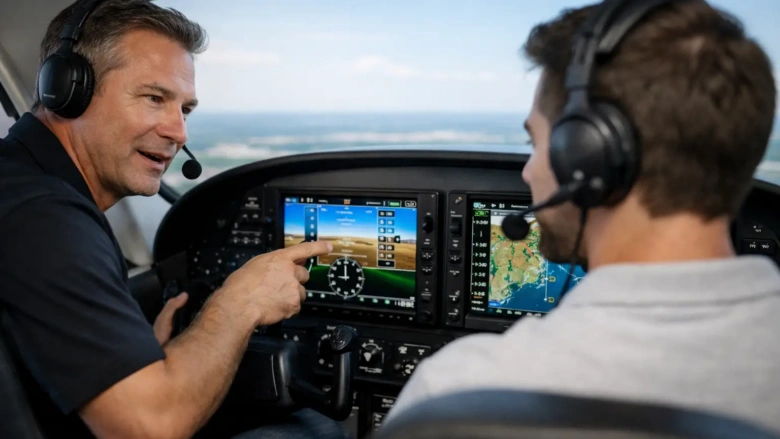
Ground school begins well before you feel ready to take a written exam. Weather, airspace, aerodynamics, aircraft systems, performance, regulations, navigation, and decision-making all show up in the cockpit. A Garmin-equipped aircraft can make information easier to access, but technology does not replace the need to understand what the information means or what to do when it is unavailable.
A good early benchmark is being able to explain the reason behind an action. Rather than memorizing a checklist item, know what risk it controls. Rather than repeating a weather rule, understand how changing conditions affect the specific flight you are planning.
First solo: proof of preparation, not independence
The first solo is the milestone people remember for decades. After your instructor steps out, the cockpit is suddenly quiet, the airplane is lighter, and every decision is yours. In most initial solo flights, you complete several takeoffs and landings in the airport traffic pattern under carefully selected conditions.
FAA regulations set the minimum age for solo in an airplane at 16. Your instructor must also determine that you are ready, endorse your logbook, and confirm that conditions are appropriate. Readiness is not defined by a fixed number of hours. One student may need more repetition to develop landing consistency; another may need more work on radio communication, situational awareness, or managing a crosswind.
A first solo does not mean you are finished learning to land. It means you have demonstrated the ability to operate safely within a narrow, supervised mission. The next objective is to preserve that discipline while adding new variables.
Solo practice and local confidence
After the initial solo, students complete additional supervised solo work. This stage sharpens consistency. You practice normal and crosswind takeoffs and landings, maintain pattern spacing, make radio calls without prompting, and learn to recognize when a landing should become a go-around.
This is where professional habits begin to separate from casual flying. Use the same preflight standards every time. Brief the departure, review airport information, and set personal limits with your instructor. A student who can make a conservative decision on a gusty day is developing a skill more valuable than simply completing another flight.
Cross-country training and the longer solo flight
Cross-country training expands the picture beyond the home airport. You will plan routes, calculate fuel, interpret weather products, work with air traffic control, navigate to unfamiliar airports, and adjust when the real flight differs from the plan. For many students, this is the point where aviation starts to feel less like a series of maneuvers and more like practical transportation.
The private pilot curriculum includes specific solo cross-country experience requirements. One key event is a solo cross-country flight of at least 150 nautical miles total distance, with full-stop landings at three points and one segment of at least 50 nautical miles between takeoff and landing locations. Your instructor will ensure each flight meets the applicable requirements and that your planning is complete before signing you off.
Cross-country flying brings trade-offs. A direct route may save time but pass near complex airspace. An earlier departure may offer smoother air but require better preflight preparation. A modern avionics suite improves situational awareness, yet a pilot still needs basic navigation skills and a disciplined cross-check. The goal is not to follow a screen blindly. It is to understand the flight well enough to make good decisions when conditions change.
Night flying, instruments, and emergency readiness
Private pilot training also includes night operations, instrument reference, and emergency procedures. Night flying can be calm and rewarding, but it reduces outside visual cues and raises the importance of planning, lighting, fuel management, and weather awareness. Instrument training at this stage is limited, but it introduces the control discipline needed when the horizon is unclear.
Emergency training deserves special attention. You will practice simulated engine failures, emergency descents, unusual attitudes, and procedures for handling in-flight problems. The purpose is not to make students anxious. It is to replace panic with priorities: maintain control, assess the situation, choose a safe course of action, and communicate as needed.
Preparing for the Knowledge Test and Checkride
The FAA knowledge test is a formal checkpoint, but it should not be treated as a memorization contest. Study until you can apply concepts to a flight. If a forecast indicates deteriorating ceilings, explain how that affects your route, fuel reserve, alternates, and go/no-go decision. If density altitude is high, connect it to takeoff and climb performance.
Your instructor will also prepare you for the practical test, commonly called the checkride. The designated pilot examiner evaluates both an oral discussion and a flight portion using the FAA Airman Certification Standards. You should expect questions about the aircraft, weather, regulations, performance, risk management, and the details of a planned cross-country flight. In the air, you will demonstrate maneuvers, takeoffs and landings, navigation, and emergency procedures to the required standard.
The final stage is not the time to chase perfection. It is the time to show safe, repeatable decision-making. If a maneuver does not go as planned, recognize it, correct appropriately, and remain composed. Examiners understand that real pilots make adjustments. What matters is whether you stay ahead of the airplane.
How to Keep Student Pilot Milestones Moving
Training momentum matters because aviation skills are perishable. Flying once or twice a week generally allows lessons to build on one another more effectively than long gaps between flights. If weather, work, or scheduling interrupts training, use simulator sessions, chair flying, ground study, and lesson reviews to stay engaged.
Come prepared for every lesson. Review the prior flight, know the next objective, and arrive with questions. Afterward, write down what went well, what needs work, and what you will do differently next time. This simple practice turns instructor feedback into a plan rather than a vague impression.
Aircraft availability is part of progress, too. A well-managed fleet and a professional maintenance culture help reduce avoidable interruptions, but weather and mechanical issues remain part of real-world aviation. A serious training program plans for those realities instead of pretending they do not exist. At Riverside Flight Academy, students can build continuity through structured instruction, modern Garmin-equipped aircraft, and simulator-supported learning when flying conditions are not suitable.
Your private pilot certificate is a major achievement, but it is also a foundation. For some pilots, it leads to weekend trips and a lifetime of recreational flying. For others, it begins the path toward instrument, commercial, multi-engine, and flight instructor training. Keep your attention on the next prepared flight, not just the final certificate, and the milestones will begin to add up faster than you expect.