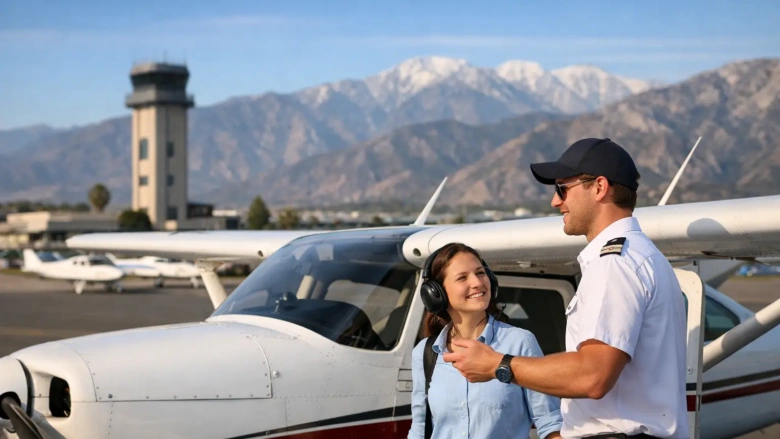
A passed checkride is a meaningful milestone, but it is not the whole story. Strong student training results show up earlier and last longer: a student arrives prepared, makes sound decisions under pressure, understands the reason behind each procedure, and continues progressing without unnecessary gaps between lessons.
For aspiring professional pilots, results matter because every certificate builds on the one before it. A weak foundation in private pilot training can make instrument training harder. Inconsistent instrument skills can slow commercial training. The goal is not simply to move quickly through a syllabus. It is to build the competence, discipline, and confidence that support a long aviation career.
Results Start With a Structured Training Plan
Pilot training has many moving parts. Students must develop aircraft control, radio communication, weather awareness, aeronautical knowledge, cockpit organization, and judgment at the same time. Without a clear plan, it is easy to complete lessons without seeing how they connect to the next milestone.
A structured program gives each flight a purpose. Early lessons establish fundamental control and safe operating habits. Cross-country training introduces planning, navigation, airspace, and real-world decision-making. Instrument training adds precision and workload management. Commercial and instructor training demand higher standards of accuracy, professionalism, and explanation.
FAA-approved Part 141 training can provide a defined sequence of stages, ground instruction, and performance checks. That structure is especially useful for career-focused students who want visible progress toward a certificate. Part 61 can also be an excellent fit for students who need greater scheduling flexibility. The better option depends on the student’s availability, experience, goals, and learning pace.
The important point is that the training path should be intentional. A student should know what they are working on today, why it matters, and what proficiency looks like before moving forward.
How to Measure Student Training Results Beyond Hours
Flight hours are necessary, but they are not a complete measure of progress. Two students may log the same number of hours and be at very different points in their development. One may be ready for new challenges because preparation and lesson continuity have been strong. The other may need more review after long breaks, changing instructors, or repeated missed flights.
Meaningful student training results are better measured through a combination of performance and readiness. Look for steady improvement in takeoffs and landings, consistent checklist use, accurate navigation, timely radio calls, and the ability to identify and correct errors. In advanced training, progress includes holding altitude and heading tolerances, managing automation appropriately, interpreting weather, and making decisions that protect safety margins.
Checkride outcomes matter, of course. A first-attempt pass can indicate that a student was well prepared for the practical test. But a capable pilot is not someone who has memorized a checkride routine. They can adapt when a controller changes a clearance, weather conditions differ from the forecast, or an approach does not go as expected.
Preparation Shows Up Before the Engine Starts
The strongest students do much of their work before arriving at the airport. They review the lesson objective, complete assigned ground school material, study the aircraft’s systems, and come prepared with questions. This makes valuable flight time more productive.
Preparation does not mean a student must know everything before a lesson. Training is where questions belong. It means they have made an honest effort to understand the material and are ready to apply it with an instructor. That habit becomes increasingly valuable at the instrument, commercial, and flight instructor levels, where the volume and complexity of information increase.
Consistency Protects Progress
Flying regularly is one of the clearest drivers of efficient training. Skills fade when lessons are spaced too far apart, particularly in the early stages of training. A student who flies two or three times a week generally spends more time building new skills, while a student who flies once every few weeks may need to spend part of each lesson regaining proficiency.
Consistency also helps instructors identify patterns. If a student has trouble with crosswind landings, instrument scan, or radio confidence, frequent lessons allow targeted practice before the issue becomes frustrating. There will always be scheduling conflicts, maintenance events, and weather cancellations. A professional training environment plans for these realities rather than treating them as surprises.
Aircraft Access and Equipment Affect Training Quality
An excellent instructor cannot eliminate the impact of limited aircraft availability. When a student is ready to fly but cannot get on the schedule, momentum suffers. The same is true when aircraft downtime regularly disrupts planned lessons.
Reliable access to a modern training fleet helps students keep a predictable cadence. It also gives them experience with the equipment they are likely to encounter as they move toward professional flying. Garmin avionics, for example, can support effective navigation and situational awareness training, but students still need to understand the underlying procedures. Technology should strengthen pilot judgment, not replace it.
Simulator training can also improve results when used for the right tasks. It is particularly valuable for instrument procedures, avionics familiarization, abnormal scenarios, and repetition of flows that would be inefficient or impractical to recreate in the aircraft. A simulator cannot fully duplicate the feel of flight, especially during landing practice, but it can make aircraft time more focused and productive.
At Riverside Flight Academy, a training environment built around fleet access, simulator practice, structured ground instruction, and pilot-led mentorship is designed to reduce avoidable interruptions. That matters when a student is working toward a time-sensitive career goal or trying to maintain momentum around work or school.
The Instructor Relationship Shapes the Outcome
A flight instructor’s role extends beyond demonstrating maneuvers. Good instructors set clear standards, explain the why behind procedures, give direct feedback, and adjust their teaching approach to the student in front of them.
Students should expect honest debriefs. Praise is useful when it identifies what should be repeated. Correction is equally valuable when it is specific. “Your approach was unstable” is less useful than identifying the cause: airspeed control, late configuration changes, fixation on the runway, or a missed power adjustment.
Instructor continuity can help because a consistent instructor sees a student’s habits develop over time. Still, working with more than one qualified instructor can be beneficial in some circumstances. A fresh perspective may clarify a concept or expose a student to different professional techniques. The key is maintaining clear training records and common standards so the transition does not create confusion.
Ownership Turns Training Into Professional Development
The best results happen when students take ownership of their progress. That includes tracking completed requirements, reviewing instructor feedback, scheduling lessons with purpose, and speaking up when a concept does not make sense.
Career-track students should also begin developing professional habits early. Show up on time. Complete weight-and-balance calculations carefully. Keep logbook records accurate. Treat every preflight, briefing, and debrief as part of the job, not as an obstacle before the fun part begins. These habits are noticed in advanced training and carry directly into flight instructor, charter, corporate, and airline environments.
There is a trade-off between speed and retention. An accelerated path can be highly effective when a student has the time, financial plan, study discipline, and lesson frequency to support it. Rushing before foundational skills are stable usually creates expensive retraining later. The right pace is the fastest pace at which the student can consistently learn, retain, and demonstrate safe judgment.
Building Results That Last Beyond the Checkride
A practical test is a day of evaluation. Pilot development is a continuing process. After earning a certificate or rating, pilots should continue practicing skills that are easy to lose, especially instrument procedures, crosswind landings, emergency operations, and decision-making in changing weather.
Students who focus on real proficiency leave training with more than a temporary checkride standard. They leave ready to learn from every flight, accept coaching, and meet the higher expectations that come with advanced ratings and professional opportunities. That is the kind of progress worth pursuing each time the wheels leave the runway.