Most people start with one question and about ten follow-ups. They want to know how to become a pilot, how long it takes, what it costs, whether they need a college degree, and whether they are already too late to start. The honest answer is that pilot training is structured, but not one-size-fits-all. Your path depends on whether you want to fly for personal freedom, build a professional aviation career, or add ratings to reach a higher level.
The good news is that the process is far more straightforward than many people expect. In the US, pilot training follows a clear sequence of certificates, ratings, medical requirements, and flight experience standards. What matters most is choosing the right training environment, staying consistent, and treating each stage as part of a larger progression.
How to become a pilot: start with the right goal
Before you compare schools or estimate costs, define what kind of pilot you want to become. That choice affects everything that follows, from the medical certificate you need to the pace of training that makes sense.
If you want to fly for recreation or personal travel, your first target is usually a Private Pilot Certificate. That allows you to fly single-engine aircraft for non-commercial purposes and gives you the foundation for everything else. If your goal is to fly professionally, the private certificate is still the first major step, but it is only the beginning of a longer training path that typically includes instrument, commercial, multi-engine, and flight instructor ratings.
This distinction matters because some students benefit from a flexible pace, while others need a career-oriented training plan designed to reduce delays and keep momentum high. Starting without a clear objective often leads to wasted time and unnecessary expense.
Meet the basic eligibility requirements
To begin training, you do not need previous flight experience. You do need to meet a few practical requirements. In most cases, you must be able to read, speak, write, and understand English. You also need to meet FAA age standards for the certificate you are pursuing. For a Private Pilot Certificate, you must be at least 17 years old at the time of certification, although you can begin training earlier.
You should also plan to obtain an FAA medical certificate early in the process, especially if you think professional flying may be your goal. A student who wants to fly for fun may pursue a third-class medical for private pilot privileges. A student aiming toward commercial operations or the airlines should think more strategically and confirm eligibility for the class of medical required later in training.
Getting a medical early is one of the smartest moves you can make. It helps surface any issues before you invest significant time and money.
Choose a training path that matches your timeline
There is more than one legal way to train in the US, but the choice usually comes down to structure. Some students train under Part 61, which can offer more scheduling flexibility. Others choose a Part 141 program, which follows an FAA-approved syllabus with defined lesson stages, progress checks, and a more formal training flow.
For career-focused students, structured training often makes a real difference. A consistent curriculum, reliable aircraft availability, simulator integration, and experienced instructors can reduce downtime and help students move through certificates more efficiently. That does not mean every student should rush. It means training should be organized in a way that supports steady progress rather than repeated restarts.
This is where school selection matters. A lower hourly rate may look attractive, but if aircraft are hard to schedule or training gaps stretch for weeks, the real cost usually rises.
Earn your Private Pilot Certificate first
If you are asking how to become a pilot, this is where your actual flight training begins. The Private Pilot Certificate teaches you how to operate an aircraft safely, plan flights, communicate with air traffic control, understand weather, and make sound aeronautical decisions.
Training includes both ground instruction and flight instruction. On the ground, you will study regulations, navigation, aircraft systems, weather theory, aerodynamics, and performance planning. In the airplane, you will learn takeoffs, landings, climbs, descents, turns, emergency procedures, and cross-country operations. You will also complete solo flights once your instructor determines you are ready.
To earn the certificate, you must pass a knowledge test, meet FAA experience requirements, and complete a practical test with an examiner. Some students finish quickly with an accelerated, consistent schedule. Others take longer because of work, school, weather, or budget constraints. Frequency matters. Flying regularly usually leads to better retention and lower total training cost.
Add the ratings that expand your capability
Once you hold a private certificate, your next step depends on your goal.
For many students, the Instrument Rating comes next. This rating teaches you to fly by reference to instruments and operate more safely and confidently in changing weather conditions and controlled airspace. Even for non-career pilots, instrument training sharpens precision and decision-making.
If you want to be paid to fly, the Commercial Pilot Certificate is the next major milestone. Commercial training builds a higher level of aircraft control, professionalism, and operational accuracy. It also comes with specific FAA hour requirements, so time building becomes part of the plan.
After that, many career-track students add a Multi-Engine Rating and then pursue Certified Flight Instructor credentials. Becoming an instructor is one of the most common ways to build flight time while strengthening your own skills. Later, pilots working toward airline eligibility continue building experience until they meet the requirements for the Airline Transport Pilot certificate.
Understand the cost without oversimplifying it
One of the most common questions about how to become a pilot is cost. The difficult part is that there is no single number that applies to everyone. Training costs vary based on aircraft type, instructor rates, simulator use, lesson frequency, local conditions, and how efficiently you progress.
What drives cost up is not always the syllabus itself. Delays, inconsistent scheduling, repeating lessons after long gaps, and poor aircraft access are often the hidden expense. Students sometimes focus on the price of one flight hour and miss the bigger picture. The more useful question is not just what training costs on paper, but what setup gives you the best chance to finish on time and on standard.
If you are pursuing aviation as a career, it helps to think in phases instead of one large total. Private, instrument, commercial, multi-engine, and instructor training each represent a defined step. Financing options, educational partnerships, and a clear training roadmap can make the process feel more manageable.
What makes progress faster and safer
Pilot training rewards consistency. Students who show up prepared, fly regularly, and study between lessons usually progress more quickly than students who treat training as occasional recreation. That does not mean you need to quit your job and train full-time. It means your schedule should support repetition and momentum.
The training environment also matters. Access to a modern fleet, well-maintained aircraft, advanced avionics, and simulator training can improve both efficiency and readiness. So can instructors who teach with a professional standard from day one. In a serious training setting, students do not just learn how to pass a checkride. They learn how to operate like future professionals.
For students in Southern California, this can be especially valuable. Busy airspace, varied weather patterns, and high radio workload can build strong habits early when training is well organized and well supervised.
Common concerns that stop people too early
A lot of future pilots hesitate for reasons that are understandable but often premature. Age is one of them. Many people start in their twenties, thirties, or later and still build successful aviation careers. The better question is whether your timeline, finances, and training commitment align with your goal.
Another concern is educational background. You do not need to come from an aviation family or have a technical degree to succeed in flight training. You do need discipline, coachability, and the willingness to study. Aviation rewards students who take standards seriously.
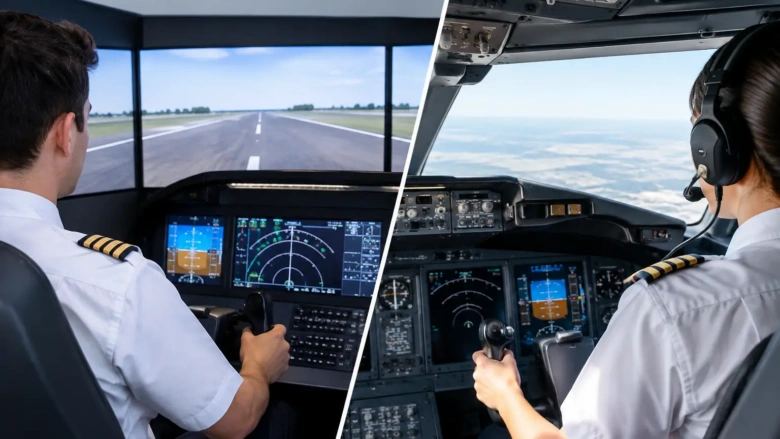
Some people also worry that they need to be certain before taking the first step. That is not always true. A discovery flight or introductory lesson can tell you a lot. It gives you a real cockpit experience, a first look at instruction style, and a much clearer sense of whether this is something you want to pursue seriously.
How to choose a school with the right fit
Not every flight school is built for the same student. Some are best for occasional training. Others are set up to help students move from zero experience into professional certifications with minimal downtime. If your goal is efficiency and long-term career progress, look for a school with a clear syllabus, dependable scheduling, experienced instructors, and a fleet large enough to support momentum.
You should also pay attention to how the school communicates. Serious programs are transparent about timelines, training phases, and expectations. They can explain what comes after private pilot training, how ratings connect, and what kind of commitment is required. That level of clarity matters. It reflects the professionalism of the operation.
At a school such as Riverside Flight Academy, that structured approach is part of the value. Students are not left to piece together their pathway one certificate at a time. They train inside a system designed to support visible progress from the first lesson forward.
If becoming a pilot has been sitting in the back of your mind for a while, the next move does not need to be dramatic. It just needs to be real. Start with accurate information, get in the airplane, and give yourself the chance to see whether this path feels as right in the cockpit as it does in your head.