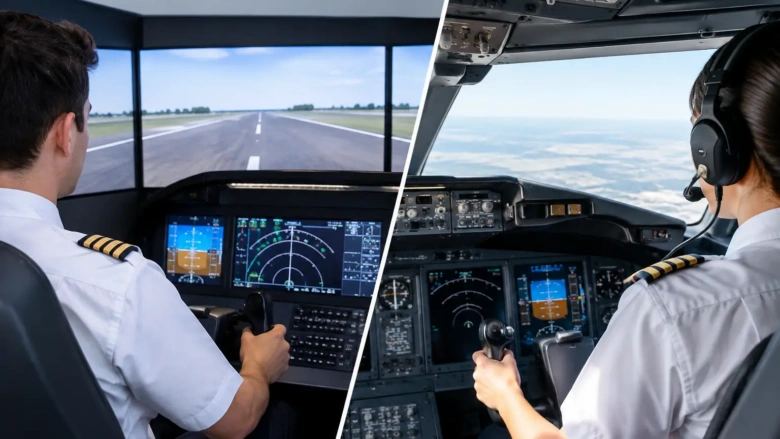
A lot of people start with the same question: how do you actually move from zero experience to an airline cockpit? The airline pilot pathway is straightforward on paper, but in real life it depends on training quality, aircraft availability, consistency, and how well each rating builds on the last.
That matters because aviation rewards momentum. Students who train in a structured environment usually progress faster, retain more, and avoid the expensive stop-and-start pattern that slows down so many careers. If your goal is the airlines, the path is real – but it works best when you understand each stage before you begin.
The airline pilot pathway starts with foundations
The first step is not the airlines. It is learning to fly well, think clearly, and operate safely under FAA standards. Most career pilots begin with a Private Pilot Certificate, which teaches the basics of aircraft control, airspace, weather, navigation, and decision-making.
This stage is exciting, but it is also where habits are formed. A rushed or inconsistent start can create problems that follow a student into later ratings. A strong program gives you more than flight time. It gives you standardization, reliable scheduling, and instructors who teach with the next step in mind.
After private training, most students continue to the Instrument Rating. This is where flying becomes more precise and professional. You learn to control the aircraft by reference to instruments, manage IFR procedures, and operate in a wider range of weather scenarios. For anyone pursuing an airline pilot pathway, instrument training is not just another box to check. It is one of the most important transitions in becoming a disciplined, employable pilot.
From commercial pilot to professional pilot
The Commercial Pilot Certificate is where aviation shifts from personal achievement to career preparation. At this point, the FAA expects a higher level of accuracy, judgment, and aircraft handling. You are no longer just proving that you can fly. You are proving that you can fly to a professional standard.
This phase often includes complex maneuvers, longer cross-country planning, and deeper attention to performance and regulations. Students sometimes underestimate how much maturity is required here. Commercial training is not simply harder private training. It is a different standard.
Many pilots also add a Multi-Engine Rating around this point. Not every early flying job requires multi-engine time, but for airline-minded students, it is an important piece of the picture. Multi-engine training introduces engine-out procedures, asymmetric thrust management, and systems knowledge that more closely reflect advanced aircraft operations.
If your long-term goal is a regional airline and then a major carrier, commercial and multi-engine training should be approached as part of a system, not isolated events. That is one reason structured academies matter. When the program is organized properly, each certificate supports the next one instead of forcing you to relearn standards at every stage.
Building hours is where the pathway can speed up or stall
One of the biggest surprises for new students is that earning certificates is only part of the process. Airlines hire pilots based not just on ratings, but on flight experience. That means time building becomes a central part of the airline pilot pathway.
For many pilots, the most common route is becoming a Certified Flight Instructor. Flight instructing allows you to build hours while sharpening your own knowledge and cockpit discipline. Teaching stalls, instrument procedures, and cross-country planning to other students makes you a more capable pilot. It also shows future employers that you can operate with responsibility and consistency.
This is where training environment matters again. If a school has limited aircraft access, weak student flow, or inconsistent scheduling, instructors may struggle to build time efficiently. If the school has a healthy training pipeline, dependable fleet availability, and a professional pace, hour building becomes much more predictable.
There are other hour-building options, including banner towing, aerial survey, pipeline patrol, charter support roles, and some corporate or utility flying jobs. But instructing remains one of the clearest and most practical pathways because it builds both flight time and judgment. It is also a natural fit for pilots who trained in a structured system and want to stay in that environment while moving toward ATP minimums.
The ATP milestone and airline eligibility
The Airline Transport Pilot certificate, or ATP, is the credential required to act as an airline captain, and in practice it is central to airline hiring overall. Most pilots pursuing airline jobs work toward the FAA experience requirements that make them eligible for ATP or restricted ATP privileges.
For many students, the number they hear first is 1,500 hours. That is the standard benchmark, but it is not always that simple. Some pilots qualify for a Restricted ATP at lower hour thresholds through approved university programs or certain military backgrounds. That is why it helps to map your route early. The details affect your timeline.
By the time you are nearing ATP eligibility, airlines are looking at more than total time. They care about training record, instrument proficiency, multi-engine experience, professionalism, and consistency. A pilot with a clean, disciplined record and strong references is in a much better position than someone who reached the minimums with scattered preparation.
How long does the airline pilot pathway take?
This depends on schedule, budget, aptitude, and training structure. A highly focused student in an accelerated, well-supported program can move from zero time to instructor-level certifications much faster than someone training casually around a full-time job. But speed only helps if quality stays high.
A realistic way to think about it is in phases. Earning private through commercial and instructor certificates can take many months to over a year depending on frequency and program design. Building the required flight time after that may take another stretch of concentrated work. Students who train consistently and stay active tend to reach airline eligibility sooner than those who take long breaks.
The trade-off is straightforward. Accelerated training can reduce total calendar time and keep skills sharp, but it requires serious commitment. A slower pace may fit your finances or life schedule better, but longer gaps often lead to review flights, repeated lessons, and higher overall cost.
Cost matters, but so does efficiency
Aviation training is a major investment, and serious students should treat it that way. The cheapest advertised rate is not always the lowest real cost. Delays, aircraft downtime, instructor turnover, and poor scheduling can add far more expense than a slightly higher hourly rate in a well-run program.
When evaluating schools, look at the full training ecosystem. Ask whether the fleet is modern and available. Ask how often students actually fly each week. Ask whether simulators are integrated effectively, whether ground school is structured, and whether financing or education partnerships are available.
For students in Southern California, that practical side matters. A strong academy should help you move through training with minimal downtime while maintaining safety and instructional quality. Riverside Flight Academy, for example, is built around that kind of structured progress, with Part 141 training, modern Garmin-equipped aircraft, simulator support, and a pilot-led team focused on professional outcomes.
Choosing the right training environment
Not every student needs the same pace, and not every school fits every goal. Some people are exploring aviation for the first time. Others are fully committed to the airlines and want a direct route from first lesson to CFI, multi-engine, and ATP preparation.
The right environment is the one that matches your seriousness. If your target is an airline career, choose a school that treats your training like career development, not occasional recreation. You want instructors who understand professional standards, aircraft that are available when scheduled, and a program that reduces idle time between milestones.
You also want honesty. A good school will not promise that every student finishes on the same timeline or budget. Weather changes things. Checkride availability changes things. Individual performance changes things. What a strong school can provide is structure, consistency, and a realistic plan.
Is the airline pilot pathway still worth it?
For the right person, yes. The demand side of aviation rises and falls over time, but the long-term need for well-trained professional pilots remains real. More importantly, this career offers a combination that few others can match: technical challenge, clear advancement, operational responsibility, and the satisfaction of building a skill set that is respected worldwide.
It is not an easy path. You will be tested on precision, discipline, study habits, and resilience. There will be days when weather cancels flights, maneuvers do not click, or the next milestone feels far away. That does not mean you are off course. It means you are doing something that requires real professional growth.
If you are considering the airline pilot pathway, start with a clear plan and a training environment that takes your goals seriously. The fastest route is rarely the one that cuts corners. It is the one that keeps you moving, keeps you improving, and prepares you to step into the next cockpit with confidence.