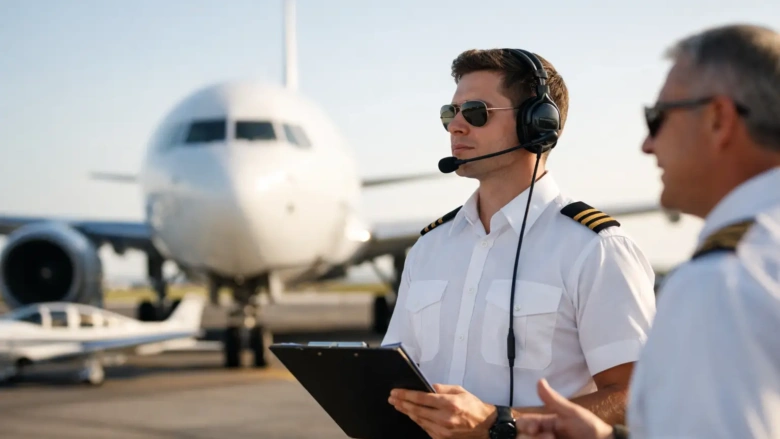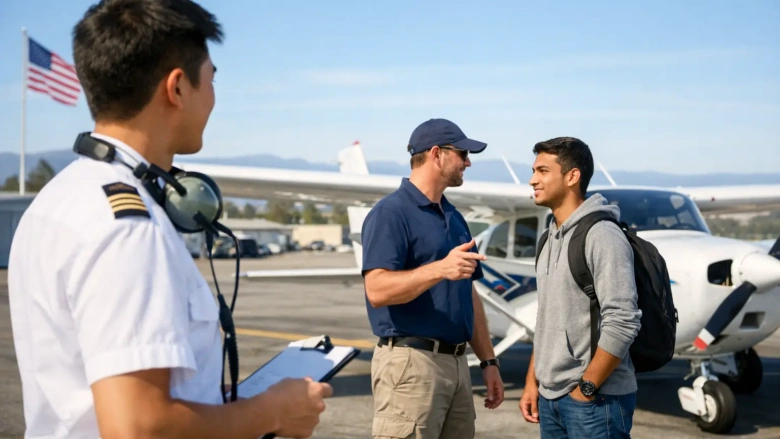
The first time you take the controls of an airplane, the question is rarely, “Was that fun?” It usually is. The more useful question is whether the experience made professional flight training feel more real, more achievable, and worth the commitment. This discovery flight lesson review explains what a well-run introductory lesson should include and how to use it to make a smart decision about your next step.
A discovery flight is not a watered-down amusement ride. It is a short, instructor-led introduction to the actual environment in which pilots learn: a working airport, a real training aircraft, aviation checklists, radio communications, and the discipline that keeps every flight safe. You will not leave as a pilot, but you can leave with a much clearer sense of whether you want to become one.
What Happens During a Discovery Flight Lesson?
Your experience begins before the engine starts. A professional instructor should introduce the airplane, explain the basic purpose of its flight controls, and walk you through a preflight inspection. This is more than a photo opportunity beside the wing. Preflight is where pilots confirm that the aircraft is airworthy, fueled, and ready for the planned operation.
Expect a straightforward briefing on safety, seat belts, headsets, cockpit layout, and what to do if you feel uncomfortable or airsick. If you have never been in a small aircraft, the amount of information may seem fast at first. That is normal. A good instructor knows the goal is not to test you. It is to give you enough context to participate with confidence.
Once in the aircraft, you will typically listen as the instructor handles the startup, taxi, and radio calls. At a busy Southern California airport, watching this process can be especially valuable. You will see that flying involves coordination, judgment, and communication long before the airplane leaves the ground.
After takeoff and once the aircraft is in a suitable training area, the instructor will often let you take the controls. You may practice gentle turns, maintain a heading, or make small altitude adjustments. The instructor remains responsible for the flight and can assist at any time. Your job is simply to feel how the airplane responds and to notice how it feels to manage several tasks at once.
The return to the airport is usually instructor-led. As you watch the approach and landing, you begin to understand why consistent training matters. Landings demand airspeed control, alignment, timing, and calm decision-making. They are learned through repetition, not instinct.
A Discovery Flight Lesson Review Should Look Beyond the Thrill
The view, the sensation of lift, and the moment you make your first turn are memorable. But a useful discovery flight lesson review should assess the training environment, not only the flight itself.
Start with the instructor. Did they communicate clearly without talking down to you? Were your questions answered directly? Did they explain why they were making decisions, such as waiting for traffic, changing altitude, or adjusting for weather? Strong instructors make complex concepts understandable while still treating aviation with the seriousness it deserves.
Then consider the aircraft and the operation around it. A modern, well-maintained training fleet signals that a school takes reliability and student progress seriously. Aircraft equipped with contemporary Garmin avionics can also help students build familiarity with the technology used throughout much of general aviation and professional flying. Technology does not replace fundamental stick-and-rudder skills, but it should support organized, relevant training.
Pay attention to the pace of the experience as well. Was the lesson organized? Was the instructor prepared when you arrived? Did the school have a clear process for scheduling, ground instruction, and continuing training? One excellent flight is encouraging, but consistent access to aircraft and instructors is what helps a student reach a certificate efficiently.
The Questions That Reveal Whether a School Fits
A discovery flight is an appropriate time to ask direct questions about training. You do not need to have decided on an airline career to ask how a school supports career-focused students. In fact, early transparency can prevent expensive surprises later.
Ask how the school structures the Private Pilot program and whether it follows a Part 61 or FAA-approved Part 141 pathway. Neither route is automatically right for every student. Part 141 training is highly structured and can be a strong fit for students who want an organized syllabus, defined stages, and a professional training environment. Part 61 may offer more scheduling flexibility in some circumstances. The better choice depends on your goals, availability, learning style, and long-term plans.
You should also ask about aircraft availability, instructor scheduling, simulator access, ground school, and realistic training timelines. A school should be willing to explain how often students typically fly and what can delay progress. Weather, maintenance, personal schedules, and inconsistent study habits all affect completion time. Honest answers are more valuable than overly optimistic promises.
Cost deserves the same clarity. Flight training is an investment, and hourly aircraft pricing alone does not show the full picture. Ask what is included, how billing works, whether books, testing fees, instructor time, simulator time, and checkride costs are separate, and what financing options may be available. The goal is not to find the lowest advertised hourly rate. It is to understand the total path to the certificate you want.
What Your First Time at the Controls Can Tell You
Many people worry that they need to feel instantly comfortable in the cockpit. They do not. Some future pilots feel calm immediately; others need a few flights before the sights, sounds, and workload become familiar. Neither reaction predicts success by itself.
What matters more is your response to learning. Did you enjoy following a procedure? Did you find yourself curious about the instruments, the radio calls, or the next maneuver? Could you accept coaching and make an adjustment without becoming discouraged? Pilot training rewards students who stay engaged, prepare between lessons, and treat each mistake as useful information.
A discovery flight can also reveal practical considerations. If turbulence made you uneasy, that does not mean aviation is not for you. Turbulence is a normal part of flying, and comfort often improves with experience. If you felt severely ill or overwhelmed, discuss it openly with the instructor. A measured training pace, appropriate scheduling, and good preparation can make a meaningful difference.
Turning One Flight Into a Training Plan
If the lesson confirmed your interest, the next step is usually an enrollment conversation and a more detailed training plan. For a recreational pilot, the initial goal may be a Private Pilot Certificate. For a career-minded student, it may be the beginning of a sequence that includes instrument, commercial, multi-engine, and flight instructor ratings.
The right plan should match your available time. Flying once every few weeks can be enjoyable, but it often leads to more review and a longer overall timeline. Students who train consistently tend to retain skills better and build momentum. That does not mean everyone needs to train full time. It means your schedule should be realistic enough to support steady progress.
At Riverside Flight Academy, prospective students can use an introductory flight to see how structured instruction, modern aircraft, simulator training, and pilot-led mentorship fit their goals. Whether your ambition is a weekend airplane trip or a professional cockpit, the first lesson should connect the excitement of flight to a credible path forward.
The best result from a discovery flight is not a dramatic declaration that you were born to fly. It is quieter and more useful: you understand what the work requires, you respect the responsibility, and you are ready to take the next lesson with purpose.