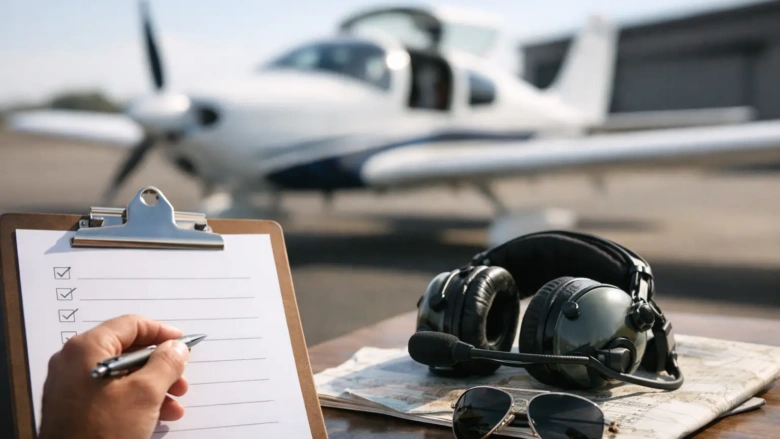
The first time your instructor steps out of the airplane, the cockpit will feel noticeably different. The aircraft has not changed, the runway has not moved, and the procedures are the same. What changes is the responsibility. To prepare for first solo flight, you need more than a strong landing or two. You need repeatable habits, sound aeronautical judgment, and the confidence to make a conservative decision when conditions are not right.
A first solo is not a surprise test or a dramatic leap of faith. It is a carefully managed training milestone. Your instructor recommends solo only after watching you perform the flight consistently, handle normal and unexpected situations, and stay ahead of the airplane without constant prompting.
What Your Instructor Is Looking For Before Solo
Your instructor is not looking for perfection. Even experienced pilots continue refining landings, radio technique, and cockpit flow throughout their careers. Before solo, however, your performance must be safe, consistent, and independent enough for the specific airport environment and weather conditions authorized for the flight.
That usually means you can complete the entire traffic pattern with control and awareness: taxi correctly, perform a disciplined run-up, make the right radio calls, maintain airspeed and altitude, manage configuration changes, and land within a safe area of the runway. Just as important, you need to recognize when an approach is unstable and execute a go-around without hesitation.
Your instructor will also assess how you respond when the flight does not follow the ideal script. A gust changes your approach, another aircraft delays on the runway, a radio call is missed, or the pattern becomes busy. The goal is not to eliminate every mistake. It is to see that you can identify the problem, use your training, and avoid letting one small error become several.
Build Consistency, Not One Great Lesson
Students sometimes believe they are ready after a single excellent session of landings. A good lesson is encouraging, but solo readiness comes from repetition. You should be able to fly a safe pattern on a normal training day, not only when the wind is calm and every radio call is easy to understand.
Ask your instructor to identify the one or two areas that most need work. It may be maintaining a precise airspeed on final, looking outside during the flare, holding centerline in a crosswind, or staying organized while communicating with the tower. Then give those items focused attention during each lesson instead of trying to improve everything at once.
A useful standard is this: could you explain what you are doing, why you are doing it, and what you would do if the situation changed? If you can answer those questions while flying, you are developing the decision-making habits that carry beyond the first solo and into instrument, commercial, and professional training.
Treat Every Landing as a Complete Pattern
Do not judge a landing only by the touchdown. A safe landing begins well before final approach. It starts with a proper departure, accurate pattern altitude, traffic scanning, radio awareness, timely configuration changes, and a stabilized approach.
When you practice, mentally review each phase after every circuit. Did you hold the correct climb speed? Did you level at pattern altitude without chasing it? Did you verify the runway was clear before entering or crossing? Did you choose the right correction for the wind? This kind of self-briefing turns flight time into deliberate practice.
Know the Paperwork and Operating Limits
A solo flight requires more than instructor approval in conversation. Your instructor will ensure you have the appropriate student pilot certificate, required medical qualification for the operation, and the correct endorsements for the aircraft, airport, and solo activity. Endorsement requirements and limitations matter, so review them before the flight rather than assuming they are handled.
You should understand the operating limitations placed on your solo. These may address the airport, route, time of day, weather, wind, visibility, or runway conditions. They are not a challenge to work around. They are part of the safety plan that makes solo flight appropriate for your current experience level.
Before the lesson that may become your solo, verify that you have your required documents and that your logbook is current and available. Confirm the aircraft’s required documents are on board and that the airplane is airworthy. At a professional flight school, these checks are part of the operating discipline you will use throughout your training.
Brief the Flight Before You Start the Engine
Your first solo will likely be a series of takeoffs and full-stop landings in the local traffic pattern. That does not mean you can skip the planning. A calm, concise briefing gives you a plan before workload rises.
Review the weather, including wind direction, velocity, gusts, visibility, ceilings, and any factors that could affect the pattern. Consider the runway in use, traffic level, airport construction or notices, and whether the wind is within both your instructor’s limit and your personal comfort level. If the conditions are borderline, waiting is a mature pilot decision.
Your briefing should also include clear answers to a few practical questions: What is the pattern altitude? Which radio frequencies will you use? Where will you exit if directed out of the pattern? What is your plan for a go-around? Where will you stop if you need to discontinue the flight after landing?
For a controlled airport, listen closely to the radio before taxiing. Hearing the rhythm of current traffic and controller instructions reduces surprises. At a non-towered airport, make accurate position reports, scan aggressively, and never assume another aircraft has seen or heard you.
Practice the Decisions That Matter Most
The most important decision of a first solo may happen before you leave the ramp. If you feel rushed, uncertain about the weather, unable to understand the traffic flow, or mentally distracted, speak up. There is no penalty for asking your instructor to review the plan or postponing the flight.
Once airborne, keep the mission simple. Fly the pattern you have practiced. Do not try to impress anyone with a short approach, an aggressive correction, or a landing you are not set up to make. A normal, stabilized approach followed by a go-around when needed is exactly what good judgment looks like.
If something feels wrong, use the options available to you. Continue safely in the pattern, request clarification from air traffic control, return for a full-stop landing, or discontinue the flight. You do not need to solve every issue alone in the air. You need to make safe choices and communicate early.
Make Go-Arounds Automatic
A go-around is not an admission of failure. It is a standard maneuver used when the approach is not stable, the runway is occupied, a gust disrupts the airplane, or you simply do not like the picture developing ahead.
Practice the go-around until the sequence feels immediate: apply appropriate power, control pitch and directional stability, manage the aircraft configuration according to your training, communicate when necessary, and rejoin the pattern. During solo, there is no prize for forcing a landing. There is real value in recognizing a situation early and trying again.
Manage the Mental Side of Flying Alone
Nerves are normal. In fact, a healthy amount of respect for the responsibility can sharpen your preparation. The goal is not to feel nothing. The goal is to keep emotion from changing your procedures.
Avoid adding pressure by announcing the flight widely before it happens. Weather, aircraft scheduling, and training readiness can all affect timing. Let the milestone happen when the conditions and your instructor’s assessment align. The best first solo is not necessarily the earliest possible one. It is the one completed with a solid margin of safety.
On the day, arrive rested, hydrated, and early enough that you do not feel hurried. Use the same checklists, flows, and callouts you use with your instructor. Do not rush because the flight is short. A first solo deserves your most methodical preparation.
After the Wheels Touch Down
When you return to the ramp, take a moment to recognize what you accomplished. Then shift back into learning mode. Debrief honestly with your instructor. Which landing felt strongest? Where did workload rise? Did you stay ahead of the airplane, or did you recover after getting behind it?
That debrief matters because solo is a beginning, not a finish line. You will use the lessons from those first circuits as you build cross-country experience, strengthen your navigation skills, and progress toward the Private Pilot certificate. Riverside Flight Academy trains pilots to approach each milestone this way: with preparation, accountability, and a clear next objective.
Your first solo will be memorable because you earned it through disciplined training. Trust the process, respect your limits, and let sound judgment be the skill that carries you into the next phase of flight.