A first flight lesson can feel like the whole goal: taxi out, take the controls, and see whether aviation is truly for you. The career goal begins after that lesson, when training becomes a disciplined sequence of ratings, experience, and professional habits. This student pilot to airline pilot example follows a realistic full-time path, including the decisions that can speed progress and the factors that cannot be rushed.
A Student Pilot to Airline Pilot Example
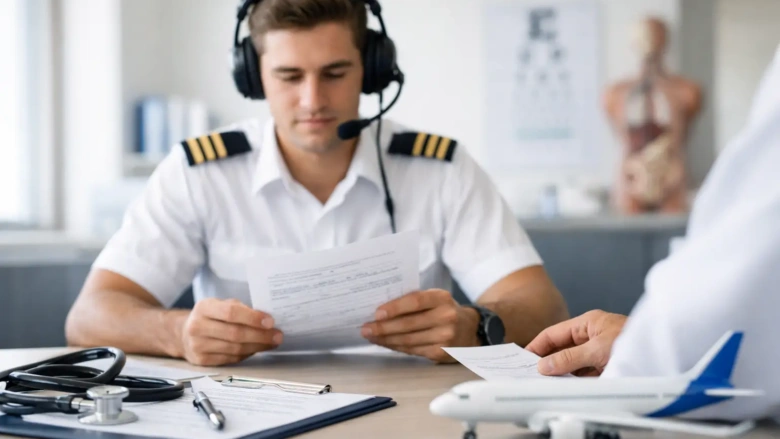
Meet Maya, a 22-year-old who starts with no flight time and wants a regional airline flight deck job. Before committing to a career program, she schedules an introductory lesson and obtains an FAA medical certificate. A third-class medical can support early training, but a prospective airline pilot should strongly consider pursuing a first-class medical early. It is a practical way to identify a potential medical issue before investing heavily in certificates and flight hours.
Maya chooses a structured, full-time training schedule. That choice matters more than many applicants expect. Flying two or three times a week allows skills to build between lessons; flying less often can mean spending more time reviewing maneuvers already introduced. Weather, maintenance, instructor availability, personal finances, and study discipline all affect the calendar, which is why a serious training environment needs dependable aircraft access, qualified instructors, and a defined syllabus.
Private Pilot: Learning to Operate Safely
Maya begins with ground school, aircraft familiarization, and the fundamentals of flight. She learns preflight planning, airspace, weather interpretation, radio communication, takeoffs and landings, emergency procedures, and cross-country navigation. Her Private Pilot certificate gives her the legal foundation to fly as pilot in command for non-commercial purposes.
FAA minimums are not promised completion times. Under an approved Part 141 course, the private pilot minimum is generally 35 flight hours, while Part 61 minimums are generally 40 hours. Most students need more than the minimum because true proficiency, local weather patterns, and checkride readiness set the pace. Maya completes her private training in about four months because she flies consistently and treats each lesson as a professional commitment.
Instrument and Commercial: Building Professional Precision
Next comes the Instrument Rating. This is where Maya learns to fly by reference to instruments, operate in the National Airspace System under IFR, plan more complex flights, and make sound decisions when visual references are limited. Airline flying is highly procedural, and instrument training is where many students begin to understand that precise preparation and communication are as important as aircraft control.
Maya then moves into commercial training. She sharpens maneuvers, completes longer cross-country flights, gains experience in complex operating environments, and learns the standards expected of a pilot being paid to fly. In an approved Part 141 commercial course, the minimum total time can be 190 hours, compared with 250 hours under the typical Part 61 route. The right option depends on the student. A Part 141 program can provide an efficient, highly structured track, while Part 61 may fit someone who needs greater scheduling flexibility.
By the end of commercial training, Maya is qualified for certain paid flying jobs, but she is not yet airline eligible. That distinction is essential. A Commercial Pilot certificate is a major career milestone, not the finish line.
From Commercial Pilot to Flight Hours
Maya adds a multi-engine rating and earns her Flight Instructor certificate, followed by Instrument Instructor and Multi-Engine Instructor certificates. Flight instructing is the most common time-building route because it allows a newer commercial pilot to gain paid pilot-in-command experience while reinforcing technical knowledge every day. Teaching landings, instrument procedures, weather, and regulations makes a pilot more accountable and more prepared for airline training.
It is not the only route. Some pilots build time through aerial survey, pipeline patrol, charter support, skydiving operations, cargo, or other commercial flying. Each path has different hiring requirements, schedules, pay structures, and operational risks. For a pilot starting with modest experience, instructing usually provides the clearest and most controllable progression.
At Riverside Flight Academy, a career-focused student can train in a setting built around these connected milestones, moving from foundational instruction to advanced certificates with modern Garmin-equipped aircraft, simulator practice, and pilot-led mentorship. The benefit is not simply speed. It is continuity: every rating is taught with the next professional requirement in view.
A Realistic Timeline From First Lesson to Airline Eligibility
Maya completes private, instrument, commercial, multi-engine, and instructor training in roughly 18 to 22 months of focused effort. That is an achievable accelerated range for a student with reliable funding, consistent availability, strong study habits, and minimal training interruptions. A part-time student may take considerably longer, and that is not a failure. A schedule that a student can sustain is better than an aggressive plan that stops halfway through.
Once she is instructing, Maya averages 70 to 90 flight hours per month. At that pace, reaching the experience required for an Airline Transport Pilot certificate may take another 15 to 20 months. A slower season, fewer student assignments, weather delays, or a job change can extend that period. The better question is not, How fast can I reach 1,500 hours? It is, How can I build quality experience while staying current, employable, and financially stable?
For many pilots, the standard ATP path requires 1,500 total flight hours plus specific aeronautical experience requirements. Some graduates of qualifying aviation degree programs and certain military pilots may be eligible for a Restricted ATP at reduced total-time thresholds. Eligibility depends on the precise FAA rules, training records, academic program, and certificate history, so students should plan with an instructor or school advisor rather than relying on a generic online timeline.
Before airline operations, Maya also completes the Airline Transport Pilot Certification Training Program, passes the ATP knowledge exam, and prepares for the practical test appropriate to her intended rating. An airline may interview and extend a conditional job offer before a candidate has all required hours, but no one should treat a conditional offer as a substitute for meeting FAA qualifications.
What Separates a Strong Airline Candidate
Flight time opens the door, but airlines evaluate more than a logbook total. Maya maintains organized records, arrives prepared, follows standard operating procedures, communicates clearly, and accepts feedback without defensiveness. Those habits are visible to chief instructors, check airmen, employers, and interview teams.
A clean training record helps, but perfection is not the requirement. A checkride discontinuance or a difficult stage of training does not automatically end an airline goal. What matters is honest disclosure, demonstrated improvement, and a professional explanation of what changed. Trying to hide a training issue creates a much larger problem than the issue itself.
Financial planning also belongs in the career plan. Training costs include not only aircraft and instructor time, but written exams, checkrides, medical certificates, equipment, living expenses, and the income pressure that can arise during full-time training. Financing support and degree-connected options can help some students, but they should be evaluated against personal debt tolerance and career timing. The most efficient route on paper is not automatically the best route for every pilot.
Build the Next Milestone, Not Just the Final Dream
Maya’s airline goal becomes realistic because she turns one large ambition into the next measurable task: pass the private checkride, become instrument proficient, earn commercial privileges, teach well, build quality time, and meet ATP requirements. That approach keeps the dream ambitious without making it distant. The next lesson, completed with preparation and purpose, is where an airline career actually starts.