The airline cockpit is not reached by collecting certificates at random. A successful transition to airline pilot career training starts with a plan that connects each rating, flight hour, and career decision to the requirements ahead. For many aspiring pilots, the goal is clear. The challenge is choosing a training path that creates steady progress without unnecessary delays, repeated lessons, or long gaps between milestones.
Airlines hire pilots who meet FAA qualifications, demonstrate sound judgment, and have built the experience to operate professionally in a crew environment. That process takes commitment, but it is manageable when training is structured from the first lesson onward.
Start With the FAA Career Path
Most airline pilots begin with no flight experience and progress through a sequence of FAA certificates and ratings. The usual path begins with a Private Pilot Certificate, followed by an Instrument Rating and Commercial Pilot Certificate. From there, many career-track pilots earn Certified Flight Instructor, Instrument Instructor, and Multi-Engine Instructor certificates to build experience while being paid to fly.
Each milestone serves a different purpose. Private training establishes aircraft control, aeronautical decision-making, and the habits that keep a pilot safe. Instrument training builds the ability to fly precisely by reference to instruments, manage changing weather, and operate within the air traffic control system. Commercial training raises performance standards and permits pilots to fly for compensation or hire under applicable regulations.
The final airline eligibility requirement is generally an Airline Transport Pilot certificate, or an approved Restricted ATP pathway for qualifying pilots. In most cases, pilots need 1,500 hours of total flight time before serving as a first officer at an airline. Certain college aviation programs and military experience may allow eligible pilots to qualify with fewer hours under Restricted ATP rules. The right option depends on your background, education plans, budget, and timeline.
Why Structured Training Changes the Timeline
Flight training is not simply a matter of flying when an aircraft happens to be available. Progress depends on frequency, preparation, instructor continuity, aircraft maintenance, weather planning, and a curriculum that makes every lesson build on the last.
Training two or three times a week usually produces stronger retention than flying once every few weeks. When students pause too long between lessons, they often spend paid flight time relearning maneuvers and procedures instead of advancing. This is one reason accelerated or career-focused programs can be effective for students who can commit consistent time to training.
FAA-approved Part 141 programs can offer additional structure through stage checks, approved syllabi, and defined course objectives. Part 61 training can provide flexibility for students balancing a job, family responsibilities, or an irregular schedule. Neither approach is automatically better. A full-time student focused on an airline career may benefit from the pace and accountability of a structured program, while a working professional may need a flexible schedule that still protects training consistency.
A professional academy should also have the aircraft, instructors, simulators, and scheduling practices to support the pace it promotes. A fast timeline only helps if the operation can reliably keep students moving forward.
Build Hours With a Career Purpose
Earning a Commercial Pilot Certificate is a major achievement, but it is not the same as being airline-ready. The period between commercial certification and ATP eligibility is where pilots develop the experience that shapes their professional confidence.
Flight instructing remains one of the most common hour-building paths because it offers frequent flying, reinforces technical knowledge, and teaches pilots how to communicate clearly under pressure. Instructors see a wide range of student errors, weather decisions, airport environments, and operational situations. Those lessons become valuable later in airline training.
Other hour-building opportunities may include aerial survey, charter operations, pipeline patrol, banner towing, skydiving operations, or corporate flying. These jobs can provide useful experience, but availability varies by location and market conditions. Some positions require more total time, multi-engine experience, or specialized qualifications before a pilot can be considered.
The best hour-building job is not always the one with the highest monthly flight total. Consider the quality of the experience as well. Flying in controlled airspace, working with instrument procedures, operating in a multi-pilot environment, and making disciplined go-or-no-go decisions all contribute to the professional judgment airlines expect.
Prepare for the Transition to an Airline Pilot Career
The transition to airline pilot career is more than meeting a flight-hour threshold. Airline training introduces crew resource management, turbine aircraft systems, standard operating procedures, high-altitude operations, and a disciplined approach to checklists and callouts. Pilots who arrive with strong fundamentals adapt more effectively.
That preparation begins early. Treat every lesson as professional training, not just a checkride requirement. Show up prepared for ground sessions. Use checklists correctly rather than relying on memory. Learn to explain your weather decisions and flight planning choices. Ask instructors for direct feedback on areas that need work.
Instrument proficiency deserves special attention. Airline operations rely heavily on instrument procedures, automation management, radio communication, and precise compliance with clearances. A pilot who earns an Instrument Rating and then rarely flies instruments may need significant review later. Regular simulator sessions, instrument practice, and continued study help preserve those skills while building hours.
Multi-engine time is another factor to plan deliberately. Airlines operate multi-engine aircraft, and multi-engine ratings are normally part of a career pathway. However, paying for large amounts of multi-engine time before it is needed is not always the most cost-effective choice. Build the rating, develop proficiency, and discuss with experienced instructors how much additional multi-engine time makes sense for your target jobs.
Plan the Financial Side Before It Plans for You
Professional pilot training is an investment with several stages. The cost includes aircraft rental, instructor time, ground school, simulator use, written tests, practical tests, medical certification, supplies, and occasionally housing or travel. The total can change based on how quickly you learn, how consistently you train, aircraft type, and weather interruptions.
A realistic financial plan should include more than the advertised minimum hours. FAA minimums are a starting point, not a promise that every pilot will finish at exactly that number. Set aside a contingency for additional practice and avoid creating pressure to rush a lesson before you are ready.
It also helps to think beyond the first certificate. If your goal is an airline seat, map the approximate cost and timing through commercial, instructor certificates, multi-engine training, and the hour-building phase. Financing can help eligible students access training, but it should be evaluated carefully against expected living expenses and the period before airline employment begins.
Choose a School That Supports Professional Outcomes
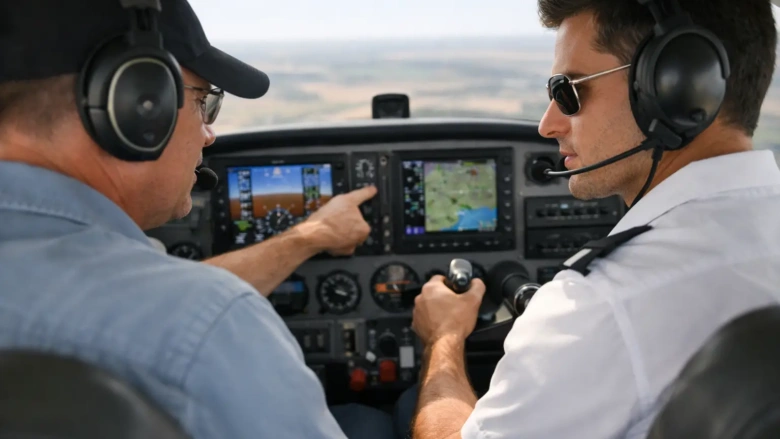
A discovery flight can tell you whether flying feels right. Choosing a career training provider requires a deeper look. Ask how often students can realistically fly, how aircraft maintenance and scheduling are handled, what avionics are used, and whether the curriculum is built around measurable milestones.
You should also ask who will mentor you through the next stages. Career training benefits from instructors who understand the path from private pilot through commercial flying and ATP preparation. Their guidance can help you make smart decisions about instructor ratings, multi-engine training, job readiness, and interview preparation.
At Riverside Flight Academy, career-minded students can train through a defined sequence of FAA certificates in a professional environment built around aircraft availability, modern Garmin-equipped training aircraft, simulator practice, and pilot-led mentorship. For students in Riverside, San Bernardino, and Los Angeles Counties, that structure can reduce the friction that often slows progress.
Keep the Long-Term Goal in Perspective
Airline hiring can change with the economy, fleet plans, retirements, and regional staffing needs. A career plan should be focused without being fragile. Build credentials that also create opportunities in charter, corporate, cargo, instruction, and other commercial flying roles.
The pilots who progress well are rarely the ones looking for shortcuts. They are the ones who train consistently, protect their medical eligibility, keep their knowledge current, and make disciplined decisions when no one is watching. Begin with a clear plan, then let each well-flown lesson move you closer to the professional cockpit.